Showing posts with label 2014 book. Show all posts

Sunday, October 9, 2016

Shh! We Have a Plan or the fragility of bad ideas

#40days40books entry 22

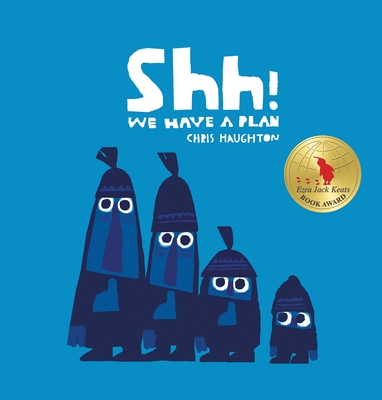
Shh! We Have a Plan is Chris Haughton's cautionary tale about the dangers of bad ideas and over-reaching.

Four un-named characters wearing hats spy a bird and while one of them is interested in greeting the flying creature, the others urge silence, saying that they "have a plan" to catch it. The plans fall apart, of course, each one more ludicrously than the last.

The littlest one never varies in kindness, kindness and stillness which are repaid handsomely by the birds during the course of the story. The hunters, though, they do not fare quite so well, never learning the power of kindness and friendship.

The images are bright and minimal, and carry the story along with ease and interest.

Shh! We Have a Plan Cover Image

Storytime is the place where I get to make all the goofy mouth noises. This book is an enormous amount of fun to read because there are not so many words to read upside down and backwards (think of me when you next read Dr. Seuss). Also because as a reader, you get to make your voice loud and soft, tense and kind, hopeful and defeated. It's so fun and the kids never don't love it.

The humor in it is the kind of thing that seems to translate well for children. The people who are laughable are, indeed, doing something that is wrong, and that we know is wrong. We know it because an alternative has been presented - one that is kind and quiet and likely to work. All of the plans the taller three characters have involve trapping the bird. Kids are thrilled when they end up falling out of trees, over each other and into water. They gasp at the crowd of birds that surrounds the littlest one whose only attempts have been at gentle friendship.

We can only hope that the three taller characters learn from their friend that saying hello and offering a bite to eat is a much better way to interact with the world than trying always to catch a thing. Simple community building with a good dose of actually funny humor.

#40days40books list

Shifting out of first gear

#40days40books entry 21

You have to know. To understand. Nothing happens in a vacuum.

On August 9, 2014 everything changed. The World Changed. Every word written here, every book listed, every reason for this list, all of it happens in a world that is not what it was before. Before Ferguson. Before Gamergate. Before all of the conversations that stripped complacency from awareness and left me grasping for some kind of sedative that would keep me from falling back into the abyss, but that had room for laughter and romance and silliness. And, yes, those are resistance and they are needed. Reading quiets the storm in my head. Gives me a map, a way toward something better. There are whole lists of books for anyone interested.

Here is the shape of my on-ramp:

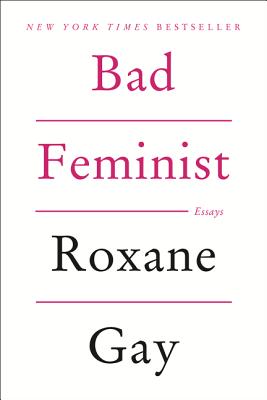
Bad Feminist is a collection of essays that catapulted Roxane Gay into think-piece stardom. Her social media presence is inimitable and intimate and her essays are no different. They range from the questions that women have about enjoying pop culture in a world where all pop culture uses our bodies as objects, sometimes violently, to just how competitive a person can get about Scrabble. Her work is complicated and wide-spread. She sees much and writes with the awareness that brings her. It is not an easy collection. There is rape and there are terrible repercussions of rape. There is discomfort and bad decision making. All of the things that make adulting such a you-tube phenomenon.

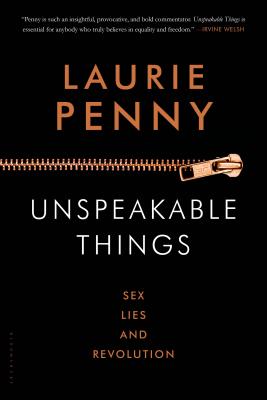
Unspeakable Things comes from a young woman who brings something utterly troubling to the table: a picture of life on the ground floor of revolution and exactly how full of shit it is. Laurie Penny writes about the realities of sexual politics in activism and the presence of rape culture in the Occupy movement. She writes about the effects of the recession on the men in her life. She writes about the growing awareness of young men that the patriarchy doesn't care about them anymore than it cares about women. She, also, writes about rape.

The thread that binds.

Bad Feminist Cover ImageUnspeakable Things: Sex, Lies and Revolution Cover Image


Roxane Gay's book came out in August of 2014, Laurie Penny's in September. They signaled the beginning of a different kind of feminist bookshelf - one explicitly connected to the world of pop culture and social media. This is not to say that feminists and social justice activists have not used social media for years - quite the opposite, in fact. Publishing and bookstores in the white majority main stream book world are finally catching on. It takes a while. The status quo is heavy and persistent. Or so we are told.

More than one person I talked to read bits of these books and put them down, saying that it wasn't like they disagreed with anything in them, but that the conversations are 40+ years old and shouldn't we have stopped having them by now.

I overheard a deeply privileged woman expressing a common theme among white ladies: Gay's feminism is fine, but too much in the world of pop-culture.

Penny's book was criticized by a friend of mine for not seeing how dangerous the world is for women of color. She pointed out that the kind of revolution that many white activists think they are advocating for puts many marginalized people in grave and immediate danger.

We do not get to choose the revolutionary narrative. It is not our right. Or our privilege.

These books were the place I began. I am working to read more, to think more, to be unwilling to turn off my brain in order to laugh or be transported. I like my brain. It thinks things. Turning if off or walking away from is simply good practice for collusion with oppression.

#40days40books list

no more lady novels for me, thanks

#40days40books entry 20

Somewhere along the way, I realized that I don't read a lot of fiction written by women. Specifically I don't read romance novels and I don't read domestic fiction.

There's a reason.

What I mean by 'lady novel' and 'domestic fiction' is this story line: Amy and Betsy have been married for 14 years and everything seems perfect. Until Now. A family tragedy opens old wounds and Amy struggles with a dark secret that threatens everything she's worked for. And what happens with Betsy has to confront her own doubts and questions?

The dark secret is: adultery, incest or rape (sometimes all of them). The doubts are usually sexuality or trust. The family tragedy is either a terminal illness or the death of a child.

You've read this book. You've read a bajillion of this book. Someday I would love to write about how global on-line etailers have directly contributed to the rise of this specific kind of book.

For now it is enough to say: enough.

As a woman who writes things and who loves to support women who write things, I read women's writing. Fiction, non-fiction, poetry, blogs, essays, tweets and listicles.

But not this. Not this limited, classist, homophobic, sexist, lazy narrative promoting nonsense.

There are books that do not, by the way, conform to this obnoxiousness, even as they look like they do.

Everything I Never Told You by Celeste Ng is a story about a family reeling from the death of a child. The dead girl's parents and older brother struggle to face what that means in their own ways, and that involves dredging conversations out of long-held silences. There is adultery. There is racism. There is a kind of internalized sexism. There is hero-worship of the golden boy. But it works. It is never easy. It is never convenient. It never panders to privilege.

And it could be the norm.

Until then, I will stick with my barricaded ladies and Irish internal monologues.

#40days40books list

Friday, October 7, 2016

The usage of a coffee table

#40days40books entry 18

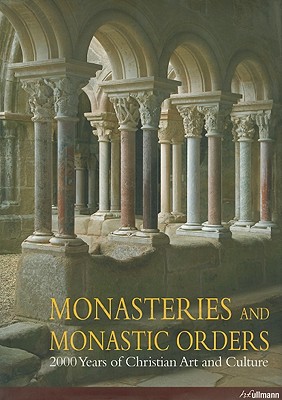
Monasteries and Monastic Orders: 2000 Years of Christian Art and Culture is a survey in photos, maps and explanatory essays of monasteries in Europe and the orders that built them. It is organized chronologically by order. Within every order's section there are 2 to 4 pages devoted to each monastery and its landscape. There is a section for women's orders. Not beguines, but that's hardly surprising.

The focus is entirely academic and artistic. Organizing the book chronologically allows the author to frame developments in architecture, decoration and communal living as they follow one from the other. The text is informative and rich in fact, of course, although not without humor and a real sense that the audience is someone who is interested in understanding and can read the imagery and design choices in the photographs. It is a thoroughly gorgeous book.
Monasteries and Monastic Orders: 2000 Years of Christian Art and Culture Cover Image
Opening this feels like walking into church

This book is almost exactly the size of the coffee table. And the coffee table is not small.

There are always books that sell much better than anyone could have predicted. We're always surprised. Partly because, as said, no one predicted it. That was the case with this one. Everything about the experience of reading this book is appealing. The colors on the cover are muted and invite contemplation. The book weighs more than 8 pounds. So bringing it home on public transport was fun.

I used to go and visit it on random Sundays off. Because I knew how to Sunday afternoon in St. Louis.

Itinerary for a Winter Sunday in early 2014:
Brunch at Mokabe's unless you are feeling flush and have a new book in which case brunch at Cafe Madeline.
Walk in the park. Pick a park. There are a gagillion.
Bus and train downtown - leave the train at the convention center and stroll back to Central Library.
2pm concert at the Cathedral with a small crowd of 40. Let the carving and the storytelling of the cathedral and the music shift your focus and astonish your senses. Have faith for a moment or two. Breathe differently the reverential air and let it be in your body.

Walk outside.
Read the buildings. Read the sunshine. Read the air and the sidewalk and the sounds of the city.
Feel your footsteps as lines of rhythm adding to history. Go slow.
By the time you get to Bridge, the brightness will have mellowed and your sight will have moved back into this century. The darkness of the bar will soothe.
Order something dark and spicy. Ask to have it in a pretty glass.

Head through the door into the bookstore - rather the opposite of heading into the Wardrobe - it is all golden wood and sunshine and open space.

Put the beer down on the counter - you need two hands for this.
Head to the Architecture section and gently, oh so gently, slide the book off the shelf.
Cradle it as you walk back to the counter. Remember - this book is not lightweight.

Be silent as you stand over the open pages. Do not spill your beer. Do not gulp it. You are surrounded by the work of work. It is sacred and deserves care.

Walk the corridors and colonnades of centuries gone charming and culture made oppressive. Consider the quiet of a faithful life, the struggles and work and rites and lights. Remember the air of the cathedral you just left and push it forward four hundred years until your lungs hurt and you are not sure if it is the beer clouding your awareness or the book.

Stay there. Until your eyes see the dust moving in sunbeams trapped in photographs thousands of miles and several years away. Until you hear chants you cannot know and the shuffling or striding of feet under robes. Move through the centuries as you turn the pages. Move around the Continent and up and down naves and around chapels. Say prayers in a voice that is not your own.

Take a breath.

Close the book.

Put it back, and go read the world anew.

My Sundays look very different now. The counter in a sun-filled space is replaced with a coffee table at home. I am more likely to have a glass of water than a glass of beer and do not need to travel so far to scour the distractions of modern life from my eyes. But the book remains. And transports. Every time.

#40days40books list
Thursday, October 6, 2016

bell hooks and the challenges of loving

#40days40books entry 17

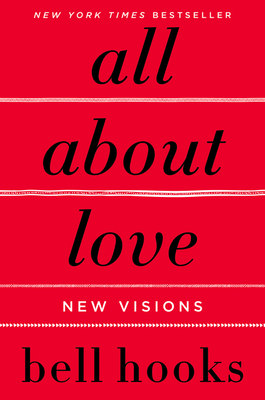
In All About Love, bell hooks takes her readers on a deeply felt journey into the heart of what it means to be a human who feels love. She digs through book after book about relationships and love to find definitions, perceptions, examples and possibilities for love in and out of relationships. It is not an easy journey to take, and it is not certain what will await us at the end. Her language is conversational and intimate, providing a kind of linguistic safe space for when the words come perilously close.

What is it to love as a verb rather than as a noun? What is it to look at the relationships in our lives and stop saying love where there is none? How does love love? Where is it, how is it, what does it bring to our lives at home and in the world? This book is a call to live in love actively and deliberately. hooks offers a challenge that is not about winning, rather about shifting perspectives and with them our lives.
All about Love: New Visions Cover Image
Valentine's Day gets an upgrade.

I was introduced to this book by a co-worker over Valentine's Day one year as part of our Staff Pick display.

Loving relationships, particularly long-lasting ones, are complicated and living. Some of them need lots of thick and dense time and emotion to maintain, and some are less high-energy, though no less important or honest. Friendship is, to me, the bedrock of all loving relationships outside of family (although there is a ton of overlap), so deep contemplation of what that means is welcome.

It turns out that I'm deeply romantic, which does not translate easily as a consciously single person with extremely intense friendships. It's not impossible or improbable or anything, but it's not normalized, so it's not normal. Spending time pondering questions like "What does it mean to do my dishes in a loving way?" is not regular for many people, and yet the question is asked and it remains because every now and then I need reminding of it.

bell hooks is a writer whose work I came to unpardonably late. She asks questions that are frequently found floating at the edges of patriarchal discourse but that whiteness finds uncomfortable, so doesn't ask. We all have that gateway author whose work opens up the library, the internet, the world to further research and possibility, and hooks is that writer for me. Specifically this book, which brought back work I'd begun years ago during a time of high stakes healing - which is usually when we start thinking about Love in our lives, no?

Thinking back on it reminds me of that shift - the one from noun to verb. It's a simple key change with drastic and marrow deep consequences.

Like the breaths on either side of falling in love.

#40days40book list

Wednesday, October 5, 2016

Olives and the voices in my head

#40days40books entry 16

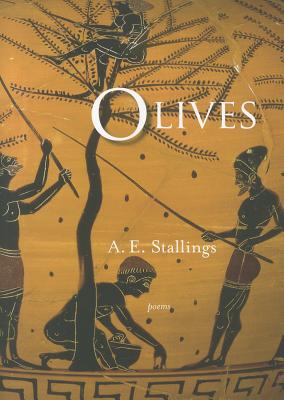
A.E. Stallings is a poet from Georgia who lives in Greece and writes the most gorgeous poetry in relatively strict form. In Olives, she treats the structure of fairy tales, myth and that odd comfort of nostalgia and loss with clarity and compassion. Her humor is made of knots and bone-deep discomforts, and she has impeccable timing. Here there are rocking lines and sharp phrases filling the trees with fruit and life.

The craft of this collection is astounding and easy to miss because she isn't drawing attention to it needlessly. Where it matters, she does. Fairy tales tend to be the province of women to draw out, turn upside down and make less sugary. Stallings does not shy away from that history, nor does she capitulate to it, a neat bit of work in measured lines and high stakes metaphor.

Read with water and bread on a day that has less room to breathe than at first you thought.

Olives Cover Image
There's a poem on the back, too

This was a reading group pick in 2014. I stared at the cover a bit, chatted with my poet friend who is in the group and bought it. Anyone who went through the Greek Myths phase recognizes the pull and lure of vase paintings. My own The Odyssey phase (unending) adds to that gravity. It was a welcome addition to the holiday season: a retail worker's roller coaster of high and low energy, sore feet, giddy laughter and constant presence.

The book was in my holiday reading pile this past New Year's, and while it was as good and deep and troubling and familiar as ever, something else happened last year that changed this for good. I got the Hamilton: An American Musical original cast recording and listened to it like it didn't break me into tiny pieces.

These two things should not be related.

Outside of having been written by MacArthur Foundation Geniuses who excel in form and the unexpected, I mean.

It was an absolute shock to read the first poem in the collection and hear Lin-Manuel Miranda's voice unbidden, reading it to me. It is important that you know that this was not the plan. I didn't connect the two before. I cannot unconnect them now. If ever the original cast of Hamilton is asked to read these (or any other) poems for recording for a reason that they are good with, it will introduce worlds to worlds already knitted only unseen.

In my head, Anthony Ramos and Phillipa Soo read this:

Fairy-tale Logic

Related Poem Content Details

Fairy tales are full of impossible tasks:
Gather the chin hairs of a man-eating goat,
Or cross a sulphuric lake in a leaky boat,
Select the prince from a row of identical masks,
Tiptoe up to a dragon where it basks
And snatch its bone; count dust specks, mote by mote,
Or learn the phone directory by rote.
Always it’s impossible what someone asks—

You have to fight magic with magic. You have to believe
That you have something impossible up your sleeve,
The language of snakes, perhaps, an invisible cloak,
An army of ants at your beck, or a lethal joke,
The will to do whatever must be done:
Marry a monster. Hand over your firstborn son.

copied from the Poetry Foundation website

Sorry, not sorry 

Monday, October 3, 2016

Coriolanus and the power of casting


#40days40books entry 15

Coriolanus is one of Shakespeare's history plays. It follows the story of an ancient Roman called Caius Martius, who, legend told someone, took the city of Corioles single-handed after his soldiers ran away in cowardice. He was given a new name to commemorate his victory and invited to ascend to the position of consul. Instead of becoming consul, however, he was banished owing to a rather unpolitic personality. He ran off to join forces with his longtime nemesis and they set about pillaging the countryside on a direct course for Rome. Once he had got outside the walls of the city and was threatening to take it, his mother, wife and child appeared in supplication for their city and its inhabitants. Coriolanus relented, the attack was called off, and he was duly dispatched by hew new comrades as a traitor to the people he'd betrayed Rome by going to even though Rome had, in fact, just betrayed him by demanding that even though he was strong enough to die for the city he wasn't mild enough to rule it, but, really. Semantics, eh?

It's a later play and a very uneasy one. There are no real subplots. None of the supporting characters has a story of their own. The poetry is specific to each speaker and there are some gorgeous lines in this for anyone who takes the time to read it.

This isn't fun to watch. The history is ancient, but not so ancient as to be mythical. The story as Shakespeare creates it is uncomfortably resonant and personal. It is glorious.

Coriolanus Cover Image
Unexpected and brutal, this one.
The Shakespeare Festival Reads group began in May of 2012 during the production of Othello in the glen at Forest Park. I was invited to be a part of choosing books for 2013, fell in love with the reading list, and started attending in 2013. (This is a real danger of bookselling - finding people you like who also like the books you like. Friends.) We weren't scheduled to read this play, but during the spring of 2014, the Donmar Warehouse Theatre's production starring Tom Hiddleston* and Hadley Fraser was broadcast at a local movie theatre. My friends and I were not about to be distracted from all the finery on stage by not knowing the story, so we read the thing. And found it utterly surprising and fantastic.

In performance, of course, it is seething, sweating, bleeding, unyielding and uncomfortable.

At one point in the action Coriolanus is expected to stand in a public place wearing a gown of modesty and baring the scars he has won in action to any of the plebians who ask. It is an act intended to foster goodwill. There is a specific area of my gut that is set aside for moments of physical vulnerability, and it was on fire the entire time.

We left gutted and babbling and deeply grateful to the folks at that theatre for casting the way they did - if Hiddleston hadn't been in it, we wouldn't have read the play.

And that would have been terrible.

#40days40books list

*before we discovered he is super basic