#40days40books entry 30
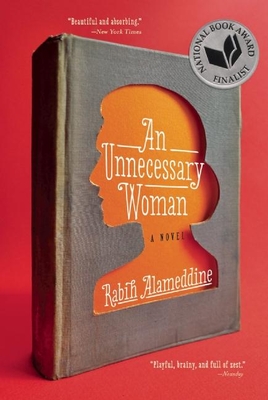
An Unnecessary Woman by Rabin Alameddine follows the story of Aaliya Saleh, a 72 yeard old retired bookseller living in Beirut. She is a single, childless women living alone in her apartment. The book opens with her drunk on New Year's Eve having accidentally dyed her hair blue. Her memories span marriage, divorce, conflict, struggle, loneliness and now old age. It is compassionate, funny, brutal and deeply affirming. I have a lot of love for Aaliya. She is kindred in many ways.
A General Theory of Oblivion by Jose Eduardo Agualusa is a novelized account of a women who, in real life, bricked herself into her brother-in-law's apartment during Angola's successful bid for independence from Portugal. She lived there for 28 years. The novel follows many other people from that day to the present, and, like many war stories, addresses the complications of survival and success and how those are measured differently. Ludovico wrote on the walls with charcoal when she ran out of books to write in. She burned books for fuel. She trapped pigeons for food. Her success at living behind her bricked wall is nothing short of tremendous.
Pond by Claire-Louise Bennett is a novel that follows an unnamed woman living in mostly solitude around her life for several months, perhaps a year. There is very little that is concrete in this book. It is an internal monologue that veers from absurd and delightful to cringe-worthy in the space of a sentence. The woman is not much in company and deeply uncomfortable after. She lives with the constant threat of depression, a reality that is finally and troublingly manifested in toward the end of the book.
Eggshells by Caitriona Lally (not yet published, look for it in February of 2017) is about a young woman called Vivian who has moved into her dead great-aunt's house in Dublin and who sets about ordering her life according to her own terms entirely. She's decided she needs a friends called Penelope, puts up signs advertising for her and then is somewhat surprised when Penelope calls and they begin a gentle friendship. Viv walks the streets of Dublin regularly and each chapter has a line drawing of the shape of her journey.
Every woman in these books has deliberately barricaded herself from the world. Sometimes that choice is made easier by mental illness or war or the inertia of circumstance. That said, they all survive, and do so pretty well. There are no tragedies here, no grand passionate outbursts or despairing destruction.
It's something I'd like to write more about, because the type of woman who generally is seen on her own is a woman who has become somehow violent or stronger. She is Circe, plotting and planning and cursing men, rather than Penelope who ran a kingdom for 20 years in the absence of her husband. I love Penelope. She made the choice to live behind the wall of her marriage and her bedroom rather than join attempts to marry her off. She made that choice. And she did well there. Ultimately, all of these women (all of them) are brought back into the world by a community or the love of a friend.
There have to be more of these women. There just have to be. Someday I'd like to find their stories, because they are so moving.
Also I should like to more carefully define what I mean by self-barricaded so that I can have that folder in my critical analysis brain for future reading.
#40days40books list
Showing posts with label rabih alameddine. Show all posts
Showing posts with label rabih alameddine. Show all posts
Wednesday, October 19, 2016

Thursday, July 16, 2015
The Voyage to Necessity
The request to sit in on a store reading group could not have landed at a better time of week. The book: An Unnecessary Woman by Rabih Alameddine, a book I'd been handsold by a customer.
 An Unnecessary Woman is the story of a few weeks in the life of Aaliya, a 72 year old former bookseller and divorced, childless woman living on her own in an apartment in Beirut. Her relationships are scattered and mostly in the past. Her family has spent the last 50 years trying to get her to move out of her apartment. The novel opens with Aaliya a bit tipsy on red wine realizing that she's dyed her hair blue.
Aaliya is a reader. She's the kind of reader who understands that the life of a book is limited to the access readers have to it. Every year (sometimes every other depending on the year before) she translates a book from English & French into Arabic. She chooses carefully in an inner monologue that I recognize from hours spent lingering over the spines of books waiting to give shape to some future meditations. And she has become almost agoraphobic over the years. A person not much given to outgoing behavior with no good friend anymore and no job to force her into interaction, she finds the proximity of her neighbors (almost all women) physically difficult to bear.
I legit love this book.
The day before we were to meet to discuss the book, one of my co-workers asked me how I feel about books where 'nothing happens.' I asked him to define 'nothing' in a narrative sense because I quite like reading huge hunks of writing that are not filled with Action!, Intensity!, and Plot! He agreed and we chatted in a work appropriate and disjointed (on account of work) way for the rest of the afternoon about the nature of narrative and building situation, etc.
I take this as the Goddess reading over my shoulder, on account of this is a book in which very little happens for a very long time. At least not in the sense of Action. From my perspective as a reader, everything is happening. I am engrossed, engaged and reaching out to Aaliya as she is retreating into her world, her apartment, her memories and her confusions.
Rereading the book was astounding. I had remembered Beirut as the framework of her life, but I had not remembered how alive and astonishing her relationship to the city is. Her physical experience of walking around it with memories living in an on every block and sidewalk section is overwhelming, to the point that my physical discomfort began to mimic hers. Happily, my experience of being moved by this book is one that was shared by the members of the book group.
They echoed the idea that even with nothing happening, there is so much going on that they really had a hard time putting the book down. We talked about her mother, about Hannah, about her loneliness and the books. We talked about the power of memory. We talked about how much we all loved Aaliya. We talked about how much we loved this book.
And then this happened: Every one of them. Every. Single. One. of Them. shared how surprised they were to learn that this book was written by a man. I got to the end of the book before I knew. I was not the only one. The astonishment we felt is not new. More to the point, the disappointment that is on the surface of how not well most men write women was gone, and that was new. It is disturbing to feel relief at a woman written as a whole character, a recognizable person, by a man.
That Aaliya faced other people's expectations of her with no intent to fulfill them. That she continued to live and to feel love for so very few. That she lived through five decades of verbal abuse from her family at her front door. That she remained essentially her own person, self aware and humorous in the face of life offering her the one narrative gift she thought she could well do without (worth it). All of these specific personality traits are generally not found in the person of one woman when that woman is written by men. So it is always strange and almost unrecognizable when it does happen.
If, as Virginia Woolf asserts "the fact that some of the most famous heroines even of the nineteenth-century fiction represent what men desire in women, but not necessarily what women are in themselves" is true even in the twenty-first century, and I believe that it is, then the women in this novel are more than necessary - they may be a signal.
Aaliya is a reader. She's the kind of reader who understands that the life of a book is limited to the access readers have to it. Every year (sometimes every other depending on the year before) she translates a book from English & French into Arabic. She chooses carefully in an inner monologue that I recognize from hours spent lingering over the spines of books waiting to give shape to some future meditations. And she has become almost agoraphobic over the years. A person not much given to outgoing behavior with no good friend anymore and no job to force her into interaction, she finds the proximity of her neighbors (almost all women) physically difficult to bear.
I legit love this book.
The day before we were to meet to discuss the book, one of my co-workers asked me how I feel about books where 'nothing happens.' I asked him to define 'nothing' in a narrative sense because I quite like reading huge hunks of writing that are not filled with Action!, Intensity!, and Plot! He agreed and we chatted in a work appropriate and disjointed (on account of work) way for the rest of the afternoon about the nature of narrative and building situation, etc.
I take this as the Goddess reading over my shoulder, on account of this is a book in which very little happens for a very long time. At least not in the sense of Action. From my perspective as a reader, everything is happening. I am engrossed, engaged and reaching out to Aaliya as she is retreating into her world, her apartment, her memories and her confusions.
Rereading the book was astounding. I had remembered Beirut as the framework of her life, but I had not remembered how alive and astonishing her relationship to the city is. Her physical experience of walking around it with memories living in an on every block and sidewalk section is overwhelming, to the point that my physical discomfort began to mimic hers. Happily, my experience of being moved by this book is one that was shared by the members of the book group.
They echoed the idea that even with nothing happening, there is so much going on that they really had a hard time putting the book down. We talked about her mother, about Hannah, about her loneliness and the books. We talked about the power of memory. We talked about how much we all loved Aaliya. We talked about how much we loved this book.
And then this happened: Every one of them. Every. Single. One. of Them. shared how surprised they were to learn that this book was written by a man. I got to the end of the book before I knew. I was not the only one. The astonishment we felt is not new. More to the point, the disappointment that is on the surface of how not well most men write women was gone, and that was new. It is disturbing to feel relief at a woman written as a whole character, a recognizable person, by a man.
That Aaliya faced other people's expectations of her with no intent to fulfill them. That she continued to live and to feel love for so very few. That she lived through five decades of verbal abuse from her family at her front door. That she remained essentially her own person, self aware and humorous in the face of life offering her the one narrative gift she thought she could well do without (worth it). All of these specific personality traits are generally not found in the person of one woman when that woman is written by men. So it is always strange and almost unrecognizable when it does happen.
If, as Virginia Woolf asserts "the fact that some of the most famous heroines even of the nineteenth-century fiction represent what men desire in women, but not necessarily what women are in themselves" is true even in the twenty-first century, and I believe that it is, then the women in this novel are more than necessary - they may be a signal.
 |
| Ida B. Wells |
Subscribe to:
Posts (Atom)