Tuesday, September 20, 2016

3) The Other Side of the Tiber

Wallis Wilde-Menozzi ran away to Rome while still in her twenties. She lived there for a while before running back. Many years later, she married an Italian man,settled in Italy, and was eventually encouraged to write about her experience of navigating a new city, new consciousness and new self. The result is this incredible book; a combination of ancient, recent and personal history that is poetic and pointed.

A lifelong obsession with the Tiber begins the book, which is sometimes worrying - there is only so much of Ahab that the world needs. But it never stays, this obsession. Her intense and emotional focus shifts almost casually between that river, Etruscans, a hundred year old man, teaching English, living in a community not of one's making or even really of one's choice and actively choosing to witness a new kind of Original Sin. She sees that every person, by no act or agency of their own, (particularly in the western world) contributes to a culture of oppression and abundance. She wonders again and again about how to live with and mitigate that. It is a question dropped almost casually into the flow of this tale. Its passing ripples far beyond what is physical.

The Other Side of the Tiber: Reflections on Time in Italy Cover Image
Can you even with this cover? Drama!

I discovered that my love of travelogues went much deeper than I'd supposed when I found and dove in to this book. (the paperback cover is atrocious. FSG is great at content. Sometimes the covers, though, I mean guys...) Wilde-Menozzi's language is like cobblestones or a gravel road on a sunny day - solid and directed and far-reaching. She revels in her culture-shocks, particularly as so many of them helped to crack open the shell of marriage and class expectation that she'd been failing at growing in. While she is, as most good travel writers are, the Observer, she participates in the place and sees, some thirty-odd years later, how the path of her life has changed because of it.

There is a massive amount of privilege in published travel narratives - there isn't a currently viable way around it. That she acknowledges this and asks difficult questions of herself and the world in which she lives is part of what makes this book still relevant on my shelves after almost 5 years there. 

It's a bitch to handsell, though. There's nothing comfortable about it. Like, you don't curl up with this one on a Sunday at solo-brunch (The Old Ways), or on the couch (anything by Peter Mayle), or unexpectedly early in the morning at the coffee shop (Dead Ladies Project) or on Valentine's Day with tea and a croissant (The Living Mountain). This is a book for sandwiches in a park and train rides and terrible coffee and bad weather and sore feet and sitting too close to the front door. It needs to be read with water and good bread and the room to close your eyes and Go There from time to time.

Monday, September 19, 2016

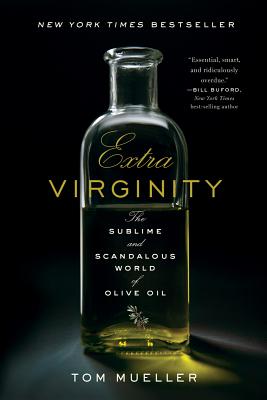
2) Extra Virginity

"Sublime and Scandalous" are tempting words, although in the service of food, they are fairly unsurprising. What is surprising about this book is the flavor, science, travel, politics and personal motivation flowing throughout. There are food scientists who do heat tests with olive oils to determine at what heat its properties no longer mean anything. There are tasters whose descriptions of a bare mouthful of the stuff inspire a kind of envy that any food has ever had so much identifiable flavor. There is a description of the Olive Oil of Old - the kind used to anoint ancient heroes and kings and travelers. Humans have recreated that substance - thousands of years and layers of myth later, we can know what Odysseus smelled like.

This is a very easy to read book whose ease is not in any kind of simplicity of language or idea, but connection of the story to the landscape to the science to the politics and the trees, oh, the trees.

Extra Virginity: The Sublime and Scandalous World of Olive Oil Cover Image
Your mouth will be so happy for you after this.
This was, I think, the first non-fiction food book that I read at Left Bank Books. The food section in the downtown store was very close to the cash-wrap. It was bright and temptingly stuffed with trivia, science and history. The year after I read this, I wandered to the Festival of Nations where I found a lovely vendor selling olive oil that tasted like sharp and bark and weather and perfect. A small bottle of it came home with me, and some green olives which I ate with crusty bread and white wine on the side sitting on the fire escape of my third floor walk up on a perfectly blistering August afternoon.

I have brought home a jug of the stuff every summer since. I save up for it. I plan for it. I eschew attempts by the people staffing the booth to tell me Anything but the price. 

Also the letters of this book are truly beautiful. Like I read whole pages dancing from letter to letter. Book design: it matters.

You guys. Rick Moody is my new hero.

A Forensic Poet for Our Time - yay, Poetry! Read more!


Dear Rick Moody: Why Do Men Spinster-Bait? New Life Hero Rick Moody Shutting it THE FUCK DOWN. I am Leslie Jones levels of hyped about this article. Witness:
The ideas of nurturing and selflessness that we associate with the feminine are the site for masculine attack, because it is in the feminine that men are woven into life. The “spinster,” the woman who is not prone to think of patriarchal power as tolerable or important in any way, has to be cut off from the herd, simply because she is in a very good position to articulate the moral dubiousness of the whole patriarchal charade.
Also, I accept the word "wanderluster" as substitute for "spinster."

Thoughts?

Saturday, September 17, 2016

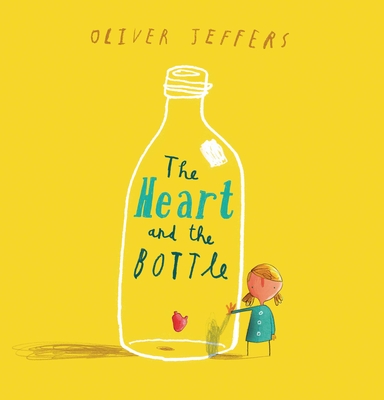
1) The Heart and the Bottle

Oliver Jeffers is mostly known for his sweetly adventurous Boy and Penguin (and occasionally alien) stories. This book about a girl who deals with grief in a real and recognizable way, is utterly without peer in children's literature. The relationship that exists between the girl and her father, who one day is suddenly, permanently, absent, is fully realized. His empty chair is physically startling, and more than one reader has found themselves unable to breathe fully until the very end of the book, when the heart is still hurting, but is back where it belongs.

What is, in other hands, merely pithy and tidy, becomes profound and challenging in Jeffers's hands. His images are stark in the bleak places and filled with impossibility in the rich ones.

I absolutely love reading this book. It isn't long, and it doesn't have a ton of story, and it gets me feeling emotions that are not generally part of my everyday, and I could love it for that alone. Happily, it is also filled with amazing imagery and was a large boost in my learning curve for children's books.

They are so infinitely possible, these books. Anyone who taps into that infinity is creating something timeless and good.
The Heart and the Bottle Cover Image
I mean, don't touch the heart, please, but still

I first read this book not long before Oliver Jeffers visited St. Louis on his book tour for This Moose Belongs to Me and getting it signed was the very first time that I was utterly incapable of speaking sense to an author. 

What was going to happen out of my mouth: "Your books have become favorites at Storytime. I really appreciate the development of friendships in them. Are you working on anything else at the moment? Thank you so much for signing my book." 

You know. Like a person.

What happened instead: "Could you sign it to Jonesey? That's not my real name! My parents didn't name me that! Jones isn't even my last name! OMIGOSH THANK YOU SO MUCH BYE!"

I may have scream/whispered my undying love at him while running away. 

Very politely and with no intention of ever saying the words at him on account of married. But still.

Conversation over the stack of books that he signed for stock after his talk a few hours later was much more in line with adults in the same industry. He is extremely good at the visiting author/artist thing, and I'm pleased that I got to work that event. Sort of getting house points back kind of thing.

Wednesday, September 14, 2016

I may have had some thoughts about today's articles Sept 14 2016

Publishers Association Issues Brexit Manifesto


The Uncomfortable Truth About Children's Books: Attempts to diversify lily-white kid lit have been, well, complicated.

Ava DuVernay's 'A Wrinkle in Time' Film Adaptation Has Found Its Lead: Storm Reid (are you kidding me with how completely adorable she is and her name is Storm like parenting done right!) Reese Witherspoon, Mindy Kaling in talks to join Oprah Winfrey in A Wrinkle in Time - Okay, who even knows who else is going to be cast, but the part where Ava DuVernay wins is basically the theme of this paragraph. Because she is everything.

How NYC's First Puerto Rican Librarian Brought Spanish To The Shelves

In case anyone wondered: privilege is everywhere - Lionel Shriver’s Address on Cultural Appropriation Roils a Writers Festival - the absolute equanimity that it must require to address anyone about the ills of being respectful while wearing a sombrero (apparently as some kind of statement) is indicative of the depth of the problem. White people will do anything to prevent having to think before they speak. Or ever. Really. We're known for it.

What is Women’s Writing? A Discussion at the Emily Books Symposium

I was going to include another link to an article about a powerful white woman having a hissy fit for not being noticed enough, but I'm not going to. Somewhere in the world a white woman with power isn't being noticed enough. It's not new. It's not helpful. Stop it.