Showing posts with label women's writing. Show all posts

Monday, October 31, 2016

Olivia Laing walks us To the River

#40days40books entry 38

To the River is Olivia Laing's book about a week she spent walking the length of the River Ouse in Sussex. It is steeped in the rhythms of walking, history, bloodshed and modernity. Laing's stops and starts and storytelling are engaging and lyrical. She brings her readers to her side, points out and then backs away, letting the story of the place, of the observers and observed take center stage.

The stories she tells are quite frequently awful ones about wars and despair and unchecked eccentricity. Many lives have been lived and lost on the banks of this and every other river in England. The River Ouse is the one that Virginia Woolf drowned in, though, and that story never leaves the book, or our awareness. Reading this is not unlike walking in the world on an uncomfortable day - exhilarhating and exhausting. Like all the best travel is.
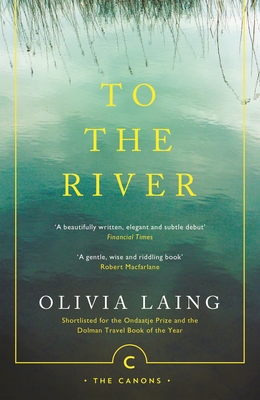
To the River Cover Image

This one I found in used, because travel writing is one of my sets of shelves, and finding travel writing written by women is not for the lazy. Finding travel writing by women of color is for the focused and determined and shouldn't be as difficult as it is. However. This is what comes of institutionalized racism, sexism and the desperation of publishing houses to keep selling the same kinds of books to their reliable customer bases in an age of predation and global e-tailers. Bastards.

My goodness, she's good, though. Olivia Laing writes beautifully of the river, of walking, of the strangely euphoric melancholy of walking along the river, of the histories of the places on its banks and fields and with an understanding of the capacity of understanding to effect real change in people's lives.

And yet, this book is catagorized as nature writing and she herself as a nature writer. Her book The Lonely City, which purports to be about being lonely in a city and finding her way through art, gets put in Art history and biography. Her book A Trip to Echo Springs, though, that ended up in Belle Lettres, which makes sense as it is about writers and drinking.

So, even though To the River reads like many of the great travel narratives I've come across, it is shunted off to Nature or to memoir, because women don't write about travel, or about travelling or about the history of places to which they have traveled. Women write about themselves. They write about how their stories intersect with the world outside of them, but mostly they write about themselves. Particularly white women. Women of color must write about themselves in the context of struggles they have encountered on account of being women of color in a world that is built to benefit white men.

Laing's book is more than confessional. Her walks are exhausting, informative, despairing and beautiful. You leave her book tired, feeling like you have to wash unearned road dust off of your face and perhaps find a good pair of shoes for feet that are not sore enough for what you've just imagined and read. Her specificity about nature feeds the illusion. Her thorough research and storytelling feed the illusion. The book is a wonder.

Read it with a glass of water and some hummus and pita.

#40days40books list

Friday, September 23, 2016

6) Jan Morris

Jan Morris is a writer of extraordinary grace, patience, and wit. Her ability to describe place as atmosphere, people and impressions is unparalleled. The 12 books you see in this photo are only a small part of her extensive and global writing oeuvre. Every place, every time, every internationally momentous event that she's written about becomes solidly present, no matter how distant from them I may be.

She no longer writes travelogues, but you can still find new editions of many of her classic works, and, as you see here, used editions as well. Because there are people in the world who do not want them. Which is sort of incomprehensible to me, but my library does benefit from it. There is only one book in this photo that I bought new, although while I was copying the link for the caption, I found another book of hers that I now have to have. (Bookselling is expensive for booklovers.)

Jan Morris is a writer who writes confidently in her own voice, while almost never telling her own story. She notably wrote about her transition in the book Conundrum and addressed it again in the follow-up memoir The Pleasures of a Tangled Life, where stories of family, personal perceptions and discovery are the focus than anything salacious or gratifying to overly curious cisgendered people. Her book was the first place where I read someone specifically addressing the details and rules of femininity. It was shocking. In the skilled hands of a writer of her caliber, though, how could a thorough understanding of the subtle and telling ways in which women and men move differently through the world be anything but?

Hav is the one novel that she wrote. In it, an unnamed traveler moves through the city of Hav, stays in hotels, eats food, meets people and conducts what we gather are interviews all the while sharing local lore, history and odd tit-bits to keep the narrative flowing. It's a city with a history intimately connected to the vanished Ottoman Empire and the Hapsburgs. A city of cynicism and romance and dour music in the air. It sounds kind of awful. I want to go there. Of course, I can't. It doesn't exist. Except in my imagination and hers. 
Travel narratives are a particular interest of mine. I hosted a travel narrative reading group for about a year. It never really took off, but I read some fantastic books! During the planning stages, a co-worker asked if I'd ever read Jan Morris as part of a longer conversation about women writers of travelogues. The beginning of this literary love affair was beautiful and compulsive. She's been an invaluable companion, even in places that are totally unexpected - my love for Steve Rogers is well-documented and reading Manhattan '45 was moving as I kept imagining Skinny Steve learning the patterns of the streets and the piers of the city, as any kid would, especially if he was the type to meet people and maybe get into trouble.

My collection of travel narratives grew on the spines of Morris's books. Her prose style is immediately impressive and her tales unfold like cooling coffee on a lazy morning. Every new-to-me book of hers that comes through Used at the bookstore is like a Golden Ticket or that one doubled-peanut M&M in the bag. 

Back in 2012, I didn't think too much about what it meant that I'd read only 3 books of travel by women, and only 1 of those was by a professional travel writer. The collection of travel narratives in my women-only bedroom library is still dominated by Morris, but is not solely hers. Still. 

Finding them is a journey unto itself. Happily, I do love to travel.

Tuesday, September 20, 2016

3) The Other Side of the Tiber

Wallis Wilde-Menozzi ran away to Rome while still in her twenties. She lived there for a while before running back. Many years later, she married an Italian man,settled in Italy, and was eventually encouraged to write about her experience of navigating a new city, new consciousness and new self. The result is this incredible book; a combination of ancient, recent and personal history that is poetic and pointed.

A lifelong obsession with the Tiber begins the book, which is sometimes worrying - there is only so much of Ahab that the world needs. But it never stays, this obsession. Her intense and emotional focus shifts almost casually between that river, Etruscans, a hundred year old man, teaching English, living in a community not of one's making or even really of one's choice and actively choosing to witness a new kind of Original Sin. She sees that every person, by no act or agency of their own, (particularly in the western world) contributes to a culture of oppression and abundance. She wonders again and again about how to live with and mitigate that. It is a question dropped almost casually into the flow of this tale. Its passing ripples far beyond what is physical.

The Other Side of the Tiber: Reflections on Time in Italy Cover Image
Can you even with this cover? Drama!

I discovered that my love of travelogues went much deeper than I'd supposed when I found and dove in to this book. (the paperback cover is atrocious. FSG is great at content. Sometimes the covers, though, I mean guys...) Wilde-Menozzi's language is like cobblestones or a gravel road on a sunny day - solid and directed and far-reaching. She revels in her culture-shocks, particularly as so many of them helped to crack open the shell of marriage and class expectation that she'd been failing at growing in. While she is, as most good travel writers are, the Observer, she participates in the place and sees, some thirty-odd years later, how the path of her life has changed because of it.

There is a massive amount of privilege in published travel narratives - there isn't a currently viable way around it. That she acknowledges this and asks difficult questions of herself and the world in which she lives is part of what makes this book still relevant on my shelves after almost 5 years there. 

It's a bitch to handsell, though. There's nothing comfortable about it. Like, you don't curl up with this one on a Sunday at solo-brunch (The Old Ways), or on the couch (anything by Peter Mayle), or unexpectedly early in the morning at the coffee shop (Dead Ladies Project) or on Valentine's Day with tea and a croissant (The Living Mountain). This is a book for sandwiches in a park and train rides and terrible coffee and bad weather and sore feet and sitting too close to the front door. It needs to be read with water and good bread and the room to close your eyes and Go There from time to time.