Showing posts with label 2016 book. Show all posts

Monday, October 31, 2016

Rosemary Mahoney makes pilgrims of us all

#40days40books entry 39

The Singular Pilgrim is a book about being a pilgrim in the most well-known and also not-so well-known pilgrimage places in the world. Rosemary Mahoney walks one of the Caminos in Spain, she goes to Lourdes, Varanasi and the Sea of Galilee. Her journeys are spiritually and physically challenging. She meets believers and skeptics alike. Each of the places she goes holds significance both sacred and mundane in the lives of people who live on or near the sites. She meets people who return again and again. It is not possible to read this book and come away unchanged.

There is something so purely focused about travel as a pilgrim that is nowhere to be found in our day to day lives. We generally don't seek out the sacred in our offices, or stores, or local coffee shops. The focus on every act as having something to offer the soul is non-existent in most secular lives. Mahoney's book offers readers something more complicated than a long walk across a country with many others going in the same direction. It offers a long conversation about the nature of living while sacred in a world that doesn't let anything alone.
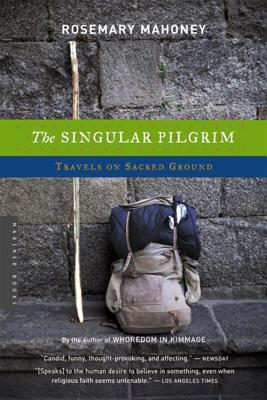
The Singular Pilgrim: Travels on Sacred Ground Cover Image

This was another used book find that got gobbled right up. It was that acquisitive a buy. I have literally no reason to walk any of the Caminos across Spain, but now I have to. No idea when. No idea how. Not worried about it yet.

Rosemary Mahoney undertook all of these pilgrimages alone and fulfilled them. She was dunked in Lourdes, rowed herself across the Sea of Galilee, spent time in Varanasi, walked the 500 miles to Santiago de Compostela and spent three grueling days in circuit on Ireland's Station Island. The people she walked and ate with are as fascinating as you could expect - and they are so very familiar and so very human.

I love that this book is so focused on the travel. There is nothing but relief in the reading of it. It's dusty and grimy and smells kind of ... much from time to time. Everything in my day looks gray and meaningless when I've come out of this book. That doesn't seem to be its aim, and it doesn't last long, but it is powerful.

This book is everything that I love - being alone, walking, being tired, talking to people as they happen along, thinking about things entirely other than "real life" and being totally immersed in the strangeness of faith and consumerism. It's that total exhaustion after a day of hiking when you fall into your sleeping bag and know that dreams will be no refuge, only more adventures. That first glass of water that tastes like nothing so much as champagne you're so sore and parched.

You feel sort of scarred and magnified before getting to the kindness of the end.

I want more. Like this. Less armchair, though. More boots and backpacks.

Read this with tea and good bread and butter or jam.

#40days40books list

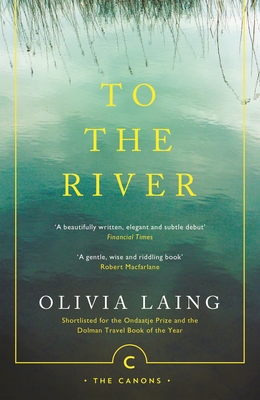
Olivia Laing walks us To the River

#40days40books entry 38

To the River is Olivia Laing's book about a week she spent walking the length of the River Ouse in Sussex. It is steeped in the rhythms of walking, history, bloodshed and modernity. Laing's stops and starts and storytelling are engaging and lyrical. She brings her readers to her side, points out and then backs away, letting the story of the place, of the observers and observed take center stage.

The stories she tells are quite frequently awful ones about wars and despair and unchecked eccentricity. Many lives have been lived and lost on the banks of this and every other river in England. The River Ouse is the one that Virginia Woolf drowned in, though, and that story never leaves the book, or our awareness. Reading this is not unlike walking in the world on an uncomfortable day - exhilarhating and exhausting. Like all the best travel is.

To the River Cover Image

This one I found in used, because travel writing is one of my sets of shelves, and finding travel writing written by women is not for the lazy. Finding travel writing by women of color is for the focused and determined and shouldn't be as difficult as it is. However. This is what comes of institutionalized racism, sexism and the desperation of publishing houses to keep selling the same kinds of books to their reliable customer bases in an age of predation and global e-tailers. Bastards.

My goodness, she's good, though. Olivia Laing writes beautifully of the river, of walking, of the strangely euphoric melancholy of walking along the river, of the histories of the places on its banks and fields and with an understanding of the capacity of understanding to effect real change in people's lives.

And yet, this book is catagorized as nature writing and she herself as a nature writer. Her book The Lonely City, which purports to be about being lonely in a city and finding her way through art, gets put in Art history and biography. Her book A Trip to Echo Springs, though, that ended up in Belle Lettres, which makes sense as it is about writers and drinking.

So, even though To the River reads like many of the great travel narratives I've come across, it is shunted off to Nature or to memoir, because women don't write about travel, or about travelling or about the history of places to which they have traveled. Women write about themselves. They write about how their stories intersect with the world outside of them, but mostly they write about themselves. Particularly white women. Women of color must write about themselves in the context of struggles they have encountered on account of being women of color in a world that is built to benefit white men.

Laing's book is more than confessional. Her walks are exhausting, informative, despairing and beautiful. You leave her book tired, feeling like you have to wash unearned road dust off of your face and perhaps find a good pair of shoes for feet that are not sore enough for what you've just imagined and read. Her specificity about nature feeds the illusion. Her thorough research and storytelling feed the illusion. The book is a wonder.

Read it with a glass of water and some hummus and pita.

#40days40books list

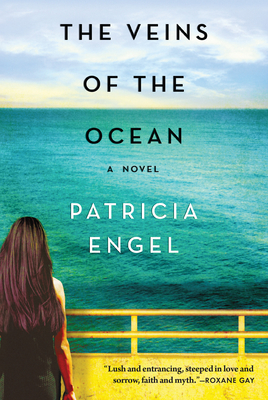
Salt-water and other painful cures

#40days40books entry 37

The Veins of the Ocean is Patricia Engel's third novel. Set in Miami, the Keys, Cuba and Colombia, the story follows Reina Castillo from a life of terrible routine to something less predictable, less safe and far more open to possibility. After her brother's death in prison, Reina leaves her mother and childhood home of Miami and moves to a small place in the Florida Keys. There she meets Nesto, a refugee from Cuba trying to find a way to be reunited with his children. Their friendship offers Reina something she did not believe she would ever have: a chance to live and to breathe freely.

Nesto's understanding of the ocean brings Reina closer to something that is fundamental to her living, to her life - the water is her balm, it is her refuge. Her travels to Colombia and Cuba to find her family and his give the story breadth and complication. Together, they learn more about survival and living than either had imagined they would.

The Veins of the Ocean Cover Image

I loved reading this book. It was quiet, well-organized, surprising and in some ways a relief. Generally speaking, men are offered stories of redemption and women get stories of healing. In this book, it is the other way around. Reina has done wrong and must find a way to live with it. Nesto is living with the pain of separation from the people that he loves and must find a way to carry on for them.

Reina is a working woman. She does nails for a living - customer service work that is paid hourly and has high expectations for performance. Her work is easy enough to find, but the novel does not trivialize or romanticize it. Throughout the book there is little in the way of decoration or unearned romance. Everything is fairly sharp, even the warmth of the ocean air when Reina finally moves to her little perfect cabin near the beach. Nesto brings her awareness out of the walls of her youth and her brother's prison cell to something less definable, more magical. He tells her stories of the spirits of ocean, and she eventually does open her heart and her mind to the possibilities.

The thing that troubles me is something that is troubling in depictions of women in general - they always need saving. Yes, her distress is different, and yes the love story is not at all gooey, and yes she is her own person entirely and yet ...

The barricaded woman is more and more apparent of late. She is socially awkward, abandoned, terrified, home during war, trapped in a world that hates her, etc. She has so many stories. Someday, perhaps, the story will be of healthy solace in that quiet place, rather than basic survival.

Perhaps, just perhaps, we will no longer be the subject of some man's heroism.

#40days40books list

Sunday, October 30, 2016

Ways to remember

#40days40books entry 36

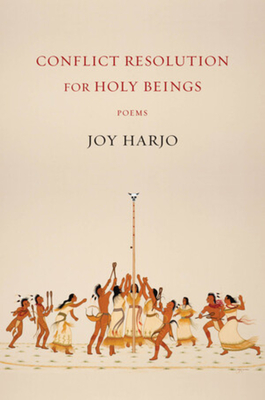
Conflict Resolution for Holy Beings is Joy Harjo's latest book of poems. She writes of time, of living, saxophones, hotel rooms and remembrance. The work is living, changing from piece to piece and creates a whole that moves within itself as well as on the heart of the reader.

Harjo is a working musician and brings the depth of that life and the depth of history into view in these poems. There is loneliness and love, as there is always, and there are moments of transcendent understanding, but those do not have to be the focus. Sometimes the focus is what limits - the unrecognized treaties, the disenfranchisement of millions of souls, colonizers and the perpetual work they have to do to maintain "control" of land that has been usurped and lives that have been sidelined. Sometimes the focus is the music, the rhythms and voices that carry humanity from one person to the next and also that are tiring and a challenge as they are a call. Every so often we hear from a different voice, a voice that is around, within, without and beyond. It speaks in between and gives what is not a frame, but a foundation for the approach to the conflict, and the recognition of holiness in beings.

Conflict Resolution for Holy Beings: Poems Cover Image


Joy Harjo writes such whole works of poetry - the poems all work together as a kind of guide taking readers along a path they would never have seen or imagined on their own. She tracks the world with our feet and then bends all the laws we think we know to make something else possible.

I picked up this book because I really like hardcover poetry books - it's a thing that came with the job and may not leave with it gone. I'd read A Map to the Next World in a class on Native Women writers back in my (extremely long) undergrad career, and knew that her writing is a very real and very deliberate journey. She writes of travel - this is how I walk in to her work. The feel of new roads, of a new/known bar or hotel. She does not travel to get home, she travels to be home. 

And home is never uncomplicated, and it is never un-holy.

#40days40books list


Approaching the work with art and Tarot

#40days40books entry 35

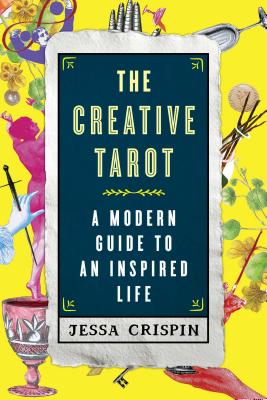
Jessa Crispin's inspired guide The Creative Tarot is an amazing amalgam of the arcane, the artistic and the delightful. It is as it suggests, a guide to getting familiar with and reading tarot cards for fun and other kinds of profit.

Every card gets its own detailed description along with works from different disciplines to flesh out its definition. Crispin writes from a foundation of respect for work and understanding that the more you put in, the more likely you are to get out - so put in everything you can fit. This book is informative and fun to read. It is also filled with compassion and history and the recognition that there is only so far any one person can go on the coattails (or mystical meanings) of someone else.

The Creative Tarot: A Modern Guide to an Inspired Life Cover Image

Women, generally, tend to be brand loyal. At least, that is how marketing people put it. We find an author, a soap, a makeup line, a department store, and we want to stick with it - we want to find a routine that feeds our lives. You know. Like humans. *cough*

Crispin's book The Dead Ladies Project basically fell off the shelf into my hands, and so, brand loyalty was born. I discovered that she'd written a guide to tarot, and was frankly surprised and also a little dismayed on account of I'd moved out of that phase of my life. I mean, I have the requisite desk in a box that is gorgeous and all, but I'd never done a reading with it. This book was such fun to read, and it offers so much in the way of understanding that work is important and that work is hard that it was not possible to leave the deck on the shelf. So, now there's that fun party moment.

Which lead to probably the best party moment ever. Harry Potter and the Cursed Child released at the end of July (in time for Harry's birthday, natch) and the bookstore threw a party. Because listen, those midnight release parties were a big deal for bookstores back in the day. What fun would it be to live in a world where launch parties were less polite and more magical? Hm.

My roommate saw me reading the book, had me read her cards once and said, "So, you're okay with reading tarot for the Harry Potter party, right?" I love my roommate and so thoughlessly said yes.

And immediately started making notes in the margins of the book about which characters were more like what cards. For an English major, this is like the best honeymoon idea ever - seriously. Not every card got a character because I didn't spend enough time to do it, and will finish it, I think.

I made a very simple 3 card spread that was based on fan fiction themes. And I totally got to tell this little girl about how her summer camp experiences at winning a sport would help her be a good friend in the world. It was like watching someone read a whole book about friendship and volleyball all at once. It was the best. The absolute best.

Jessa Crispin has a newsletter where she writes about tarot, life and other tragedies, and also she is on twitter and has another book coming out in 2017. (but for real, if you like travel, please to read The Dead Ladies Project it is extraordinary)

#40days40books list

Monday, October 24, 2016

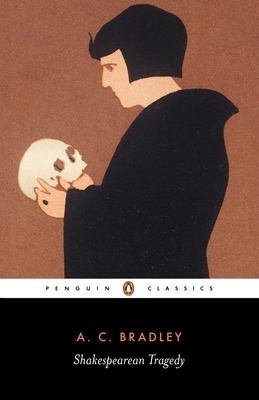
The beautiful lectures - Shakespearean Tragedy

#40days40books entry 34

This collection of lectures by A.C. Bradley was published in 1904. It was based on talks he gave to students and has been reprinted as a Penguin Classic.

There are eight lectures total, I think. They establish the definition of tragedy that Bradley uses and the history of the plays as they were then knows. Each tragedy that he discusses gets 2 lectures apiece: Hamlet, Othello, King Lear, and Macbeth. The lectures range from discussion of the individuals at the heart of these tragedies to larger themes that WS addresses, sometimes with conclusions, and sometimes without.

They are informed, informative and delightful.

Shakespearean Tragedy: Lectures on Hamlet, Othello, King Lear, and Macbeth Cover Image

So, I'm in this Shakespeare Festival Reading Group, and we decided to read this book for our January meeting. We are not always super thoughtful about how much time these books will take to read, but here's the thing - we read them.

I loved this book. It is dense. It is insistent. It repays close attention. It is funny. The lectures are mind-blowing and also - they are incredibly well-organized. You could, with a little bit of time and effort, turn one of them into an interesting twitter thread or tumblr post. The points are succinct and related and flow one from the other. I think that might be a cool way to get into them, actually - to pull out the main ideas and connect them via supporting claims, etc. Ah, social media, how  you can inspire closer thought!

Also we're reading Hamlet for November, so I'm totally dipping back into this. There is something very grounding in the experience of thinking through his thoughts on the character of Hamlet - it can help when, as a not-an-actor, I'm faced with words meant to be spoken by someone who knows how.

I think that anyone looking to understand how to craft a good argument about literature should add this book to their list. Along with Playing in the Dark by Toni Morrison.

#40days40books list

Saturday, October 22, 2016

The arrow toward What Even is Femininity points this way

#40days40books entry 33

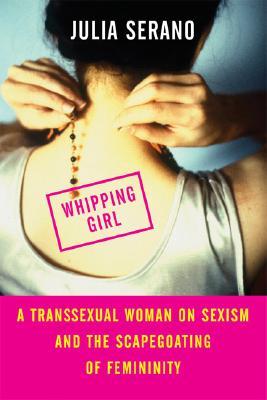
Whipping Girl: A Transsexual Woman on Sexism and the Scapegoating of Femininity by Julia Serano is a thorough examination of all of the ways sexism and cissexism work in our culture to diminish and demean people who are feminine.

She shares her own experiences in this highly thoughtful and well-researched book that examines the bases for cissexism against transwomen, and its connection to sexism and its constant need to rate femininity and/or its expression as 'less than' masculinity. She uses her background in biochemistry to organize her thoughts and build arguments about and against the kinds of discrimination that target transwomen. It is a book that ought to be read and read again.

Whipping Girl: A Transsexual Woman on Sexism and the Scapegoating of Femininity Cover Image

We read this book in our Feminists in Love reading group and I am so glad that we did. Serano's arguments are fascinating, yes, but more importantly, they are accurate and intriguing. I was left with a ton of questions that were in no way part of the scope of this book, but that I think are correct to ask. The biggest one that I've had is about how femininity is defined, determined, and disseminated in the larger culture. We see constant depictions of feminine women and men, but masculinity is more specifically named in my culture consumption and that is of interest to me.

Serano is also the person whose definition of the supposed goal of femininity (to be sexually appealing to men) struck me as coherent and unique in my experience. She, of course, complicates that expectation throughout the book.

I still haven't sent my copy to my niece. At some point I will just buy one for her. This book is incredibly important reading. The conversations left in its wake are difficult and messy and go to uncomfortable places, and those are needed places. My own perceptions of how to be a woman are unexamined, and that's not how I want to move through the world. Who even knows what it would be to be a woman in a world that didn't hate us. Asking the question sparks a lot of anger and despair. The anger is motivating; the despair gets a cookie and vitamins and hydration.

#40days40books list

Friday, October 21, 2016

Kingdoms and Gods all turned on their heads

#40days40books entry 32

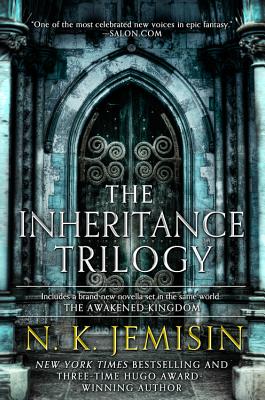
The Inheritance Trilogy by N.K. Jemisin includes The Hundred Thousand Kingdoms, The Broken Kingdoms, The Kingdom of Gods and the novella The Awakened Kingdom. The world of the Hundred Thousand Kingdoms is one rich with magic, trade, lore and upheaval. For two thousand years, the Arameri have ruled using the power of four enslaved gods.

Yeine Darr, a grand-daughter of the ruling Arameri, arrives in Sky after her mother's death. She is a grandchild of the current ruler who has never before met her mother's family. With her comes something entirely new and unexpected. Will she survive her family? Will she survive the gods? Will the gods survive her? The story is riveting, strange, familiar and grand. It ranges over centuries by the end of the novella and is ultimately an incredible portrait of a world built on suffering trying to move towards something more like grace.

The Inheritance Trilogy Cover Image

If you are N.K. Jemisin - I'm a bit in reader-love with your books and your words, just so you know. This is entirely biased and unapologetic.

I read The Hundred Thousand Kingdoms for a reading group and thought it was really clever and well-developed and a good book. And then I didn't read further in the series because I read another 'clever' book for the same group at about the same time and -

Let's talk about how one book affects another, shall we? Let's talk about how the cynicism that lands when you read books by mediocre authors who use sex, gender, sexuality, race, religion, birthplace, etc. as narrative devices rather than descriptors of people who live in a world that doesn't actually have to be genitally connected to the patriarchy and its pathetic excuse for fantasy (derivation only goes so far before you end up with a straight line) can, in fact, limit the range of your response to a well-written book that is doing something entirely different.

That is what happened. I read a derivative book and it affected how I read Jemisin's novel. I labeled it good, but not great, and shied away from its sequels.

When, a few years later I picked up the gorgeousness that is the Trilogy, I was utterly transfixed by the exploration of the world, the discussion of culture, of survivors, and of what is probably the most amazing and complicated and interesting and not-at-all-gross Dark Lover character EVER WRITTEN IN WORDS THAT I CAN READ.

You know how you don't know you're parched until someone gives you water? That's how I felt reading these books.

Hydrate.

It's good for you.

#40days40books list