Showing posts with label walking. Show all posts

Monday, October 31, 2016

Olivia Laing walks us To the River

#40days40books entry 38

To the River is Olivia Laing's book about a week she spent walking the length of the River Ouse in Sussex. It is steeped in the rhythms of walking, history, bloodshed and modernity. Laing's stops and starts and storytelling are engaging and lyrical. She brings her readers to her side, points out and then backs away, letting the story of the place, of the observers and observed take center stage.

The stories she tells are quite frequently awful ones about wars and despair and unchecked eccentricity. Many lives have been lived and lost on the banks of this and every other river in England. The River Ouse is the one that Virginia Woolf drowned in, though, and that story never leaves the book, or our awareness. Reading this is not unlike walking in the world on an uncomfortable day - exhilarhating and exhausting. Like all the best travel is.
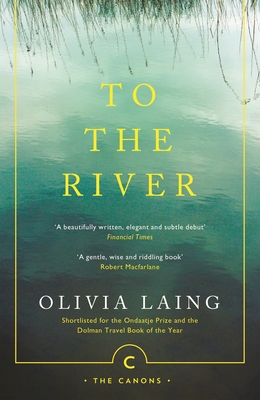
To the River Cover Image

This one I found in used, because travel writing is one of my sets of shelves, and finding travel writing written by women is not for the lazy. Finding travel writing by women of color is for the focused and determined and shouldn't be as difficult as it is. However. This is what comes of institutionalized racism, sexism and the desperation of publishing houses to keep selling the same kinds of books to their reliable customer bases in an age of predation and global e-tailers. Bastards.

My goodness, she's good, though. Olivia Laing writes beautifully of the river, of walking, of the strangely euphoric melancholy of walking along the river, of the histories of the places on its banks and fields and with an understanding of the capacity of understanding to effect real change in people's lives.

And yet, this book is catagorized as nature writing and she herself as a nature writer. Her book The Lonely City, which purports to be about being lonely in a city and finding her way through art, gets put in Art history and biography. Her book A Trip to Echo Springs, though, that ended up in Belle Lettres, which makes sense as it is about writers and drinking.

So, even though To the River reads like many of the great travel narratives I've come across, it is shunted off to Nature or to memoir, because women don't write about travel, or about travelling or about the history of places to which they have traveled. Women write about themselves. They write about how their stories intersect with the world outside of them, but mostly they write about themselves. Particularly white women. Women of color must write about themselves in the context of struggles they have encountered on account of being women of color in a world that is built to benefit white men.

Laing's book is more than confessional. Her walks are exhausting, informative, despairing and beautiful. You leave her book tired, feeling like you have to wash unearned road dust off of your face and perhaps find a good pair of shoes for feet that are not sore enough for what you've just imagined and read. Her specificity about nature feeds the illusion. Her thorough research and storytelling feed the illusion. The book is a wonder.

Read it with a glass of water and some hummus and pita.

#40days40books list

Sunday, September 25, 2016

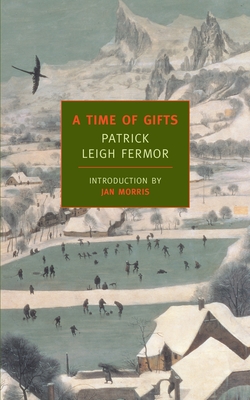
8) A Time of Gifts by Patrick Leigh Fermor

On December 8, 1933, Patrick Leigh Fermor set out on a journey that took him from The Hook of Holland to Istanbul. On foot. For eighteen months. He left England when he was eighteen. The first edition of A Time of Gifts, the first of the book chronicling this journey, was published in 1977, the second in 1986 and the third, built from his notes, posthumously in 2013.

There is no other work that I have read that compares to this. It holds an utterly unique place in the world of letters, even though young men walking away from England is not all that unusual, nor was it at the time. Partly it is Fermor's transformation from a relatively gauche teenager in a world that demanded diplomacy and tact, to a young man accustomed to change and shift with the days and nights in barns and castles and different languages every day. There are few joys that compare to his passage on the abbey at Melk (in photos rather like an overgrown muscial box), or his discourse on the way that language creates landscapes in his ears. 

There is nothing about this book that was uncrafted - Fermor did not sit down one fine day in 1975 and just take time jotting down notes and occasionally checking a map. The sentences are deliberate, the structure is chosen and the effect is hypnotizing. So much so that finishing the book I was a bit out of breath and not entirely ready for the next push down the way. (Between the Woods and the Water, btw, is frequently called the best of the three of these books. It is also without peer.)

A Time of Gifts Cover Image
Herein lie treasures untold.
You know how when you fall in love with an author you search for everything they've written only to find they've written introductions for boatloads of books they didn't write one of them writes the most extraordinary prose? I found Nan Shepherd and Laurie Lee and Edward Thomas through Robert MacFarlane that way. 

That is not what happened here. This book was on the shelving cart and jumped into my hand. I bought it almost immediately.


I love to walk. I have always walked. Usually with a destination in mind, but oh, to walk just to move through a place at the speed of a footstep - what bliss! Anyway, point is, the back of the book said 'walking,' it said something about Europe, and there's an introduction by Jan Morris. 

Books are dangerous tempting things. There are whole worlds in them, frequently hiding in plain sight in your own bland world that isn't bland at all, it's just not roiling with type and paper. I've no wish to go back in time. I've no nostalgia for a world that was still showing scars from a war almost 300 years gone - had I lived there, I think it would be different. There is a specific kind of cynicism in white liberal guilt that lingers even when the guilt is mostly shunted off to more useful pursuits. Like walking. Like meeting people and learning their languages and eating their food and working to repay them and laughing and drinking and dreaming and walking. 

It is a dream that got a foothold somewhere in the first pages of my first reading of this book. Walking. Days and weeks and months of walking. It is an old dream; A Time of Gifts gave it new life. Nostalgia is not what lies on a walking path no matter old it is. History is underfoot, not some illusion. Fermor interacts with that history all along the Danube, the river that is almost a companion on his journey. He meets Romani ('Gypsies') all along the way, especially as he moves south from Germany. I think of how soon they will be hunted in his time frame. How many of the people that he met will not live through the war. 

This is a travelogue that leaves me with sore feet and the need to wash the road I have not walked off a face that hasn't been outside for the better part of several hours. It gives me the world if only I will tie my shoelaces and go.