Showing posts with label 2013 book. Show all posts

Sunday, October 2, 2016

One Fish Two Fish by Dr. Suess

#40days40books entry 14

One Fish Two Fish Red Fish Blue Fish was published in 1960 and continues to delight and confound to this day. Nothing happens. There is no plot. Which is part of what makes this classic what it is - utter absurdity in motion. It is also an extraordinary boost to the imagination. Who even thinks of this stuff? Dr. Suess, that's who.
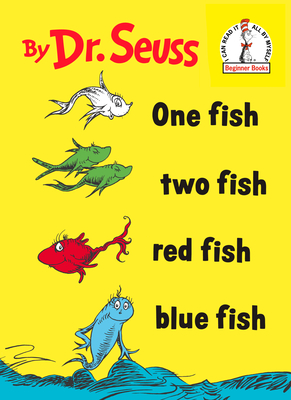
One Fish Two Fish Red Fish Blue Fish Cover Image
Upside down and backwards. Whew.

I read this book one Saturday downtown sometime in 2013, and it blew my mind. Not because of the content or the rhyming (or the tongue-twisters that didn't twist my tongue off). At one point I looked up and there were 7 children, all under the age of 4 sitting quietly. Quietly! Listening. That had never happened before. I'd never had that big of a crowd for Storytime that didn't have a guest author, and I'd never seen the children sit so still during an entire book. And it is not a short book. The power of Suess, I guess.

Back in May of 2016, we hosted a group of kids from a local school at the store for a morning of Storytime and activities. I read If I Rad the Zoo to them. I ... did not read the book beforehand and there's a line in it that caught me entirely off guard. You know those moments around the dinner table when you've just said The Wrong Thing and everyone gets really quiet? The line is "I'll hunt in the mountains of Zomba-ma-Tant/ with helpers who all wear their eyes in a slant" and ... well, I think you see. It's awkward. You flinch. That happened. We all got real, real quiet. And then I took a deep breath and kept going, with one eye on the sentence ahead for the rest of the book.

Some few days later a customer came upstairs with a used copy of Geisel's WWII political art, and noted the anti-Japanese racism in his work of the time.

Great.

All our faves are problematic. That's how humans work. Also, all our faves are recorded on the internet because that is how contemporary civilization works. The internet is searchable. I searched.

"dr suess japanese"

And discovered that Horton Hears a Who was written by Dr. Suess as recognition of, and attempts at atonement for, his anti-Japanese racism and sentiment during the war. See also: Can We Forgive Dr. Suess

I mean, look, there are always other authors to read. Ezra Jack Keats, as it turns out, is even more amazing than we all thought.

And I will find others. Because you don't stop doing that work. Clearly. Dr. Suess is still helping me open my mind and find more in the world.

#40days40books list

Friday, September 30, 2016

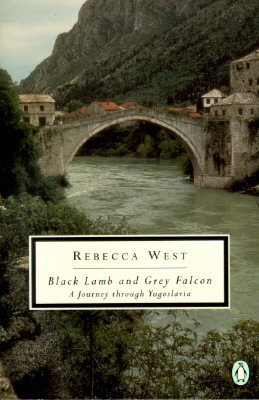
Black Lamb and Grey Falcon by Rebecca West

#40days40books entry 13

Black Lamb and Grey Falcon is a legitimate literary classic. Rebecca West's prose, her observation and storytelling are sharp, thoughtful and well-rounded. West wrote the book about six weeks of travel she and her husband undertook through Yugoslavia in 1937. Viking Press published it in 2 volumes in 1941.

The work follows their travel route and is easily enough followed on paper, though the subjects range far back in history. West's irritation at the amount of history about Yugoslavia that was unknown or ignored in the West is palpable and fuels much of this book. It is at times exhausting to be faced with so much information, so many places and peoples and at the same time, that exhaustion was exactly right. There is no absence of love for the people she meets and the land she travels. While her approach does romanticize the roles of history and culture, it is not careless and it is not without meat.

There are few travel narratives I have read that do not owe a debt to Rebecca West. The work of reading this is well worth it.

Black Lamb and Grey Falcon: A Journey Through Yugoslavia Cover Image
Yet another doorstop. Read this in chunks.
So, if I remember correctly (it's been a few years), this is a book that our Used Book Buyer brought to me one day and asked if I'd read it. There is nothing so delightful as a recommendation for a book from a friend, and particularly this friend who has an uncanny knack for gifting recommendations. 

It was utterly shocking to read. Rebecca West was then utterly unknown to me (as are most of the women who wrote for magazines since ever)(unless I've dug up their collections or travel books)(or someone mentions them in one of those books intended to redirect your attention away and toward and thank you for acknowledging this exceptional writing), and while I still know very little about her, this book is an anchor of my travel writing library.

She is not always a comfortable companion and she travels uncomfortable roads. Her extreme anger at nuns is distracting for me, though it does not affect the storytelling, only the audience. She is clearly writing from a specific perspective, one that is privileged, colonial and monied. 

The history and sense of need for understanding and compassion in the face of overlapping layers of ludicrous administration, wartime decisions, environmental degradation and the subsequent cultural developments is as relevant today as it was in the years leading up to the second World War. 

Paying attention to someone else's truth can lead to a need to wash your face right off when they are done speaking. That conflict is ever-present here. It comes with greater understanding. Whether that understanding is needed in your own library is entirely a matter of perspective. I keep it in mine as an active reminder to do better and learn more. Also her prose and her path are gorgeous.

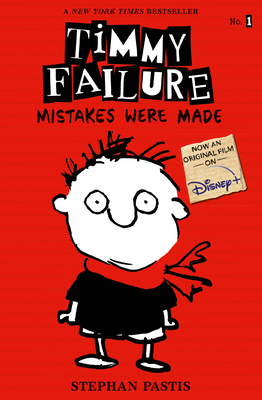
Timmy Failure by Stephan Pastis

#40days40books entry 12

Stephan Pastis is best known as the creator of Pearls Before Swine, a daily comic that's been in papers since 2001. In 2013, Candlewick Press published his first middle grade novel featuring a character entirely separate from that world (although, truth be told, Timmy would not be entirely out of place there. Nor would Total.). Meet Timmy Failure in his first adventure: Mistakes Were Made.

Timmy is a high-energy, low-intellect kid with a polar bear for a best friend and a nemesis (She Who Will Not Be Named (Corrina Corrina)) for the record books. He is adjusting to living with his mother in a new apartment. She works a lot and he has decided to help make money by starting a detective agency with his pet polar bear, Total. The agency is called Total Failure, Inc. Total eats most of the profits. Most of the costs, too. 

There are now five books in the series, and Timmy shows no sign of suddenly getting it right. Thankfully.

Timmy Failure: Mistakes Were Made Cover Image
This kid. Seriously.
One of my co-workers handed me the galley for this book in late summer of 2012, not long before we hosted Stephan Pastis on book tour for a Pearls Before Swine collection. (pro-tip: If you get the chance, go see him when he goes on book tour. The man can tell a story. Get there early. Plan to stand in line if you want the book signed. It will take a while. It will be worth it.). I managed to not drool my love for this book all over him. Not by much. We were slightly understaffed. That helped.

Timmy is kind of an idiot. He is young, his world has just flipped itself, his polar bear is a garbage disposal who messes up everything, and he has to deal with all sorts of people around him who make no sense to the poor boy. He decides to add order to things by solving mysteries. He is not always amazing at solving mysteries. Or at accepting the consequences when his "solutions" are not exactly on the mark. 

Normally, I would run as fast as possible away from this character, but Pastis gives him depth, sweetness and a naivete that resonate throughout his shenanigans. This was the first middle grade book that I'd connected with for 6 years, and with it came a whole library of books. The best books for middle grade readers are the ones that get that kids see the horrible in the world and know they will have to deal with it someday. Not today. Not yet. Soon enough. They know they have to be ready for it, and that lends a weight to the journeys of these characters that when done well makes these narratives almost fly off the page. 

Timmy is living with his mom who has to work too hard and gets too little support from anyone else. He doesn't know what's happened, really, and he doesn't know how to help her. But help is needed and questions have to be answered, so start a detective agency. I have no idea what Pastis thought he was doing when he wrote these books, but I find in them laughter in the face of the weight of one kid's world that otherwise might be too much.

Wednesday, September 28, 2016

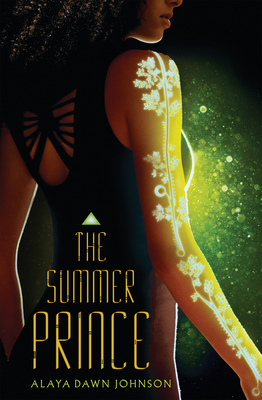
11) The Summer Prince by Alaya Dawn Johnson

The Summer Prince is a YA novel set in a post-apocalyptic world 400 (at least) years into the future. The setting is the pyramid city of Palmares Tres, a world of rigid class hierarchy, incredible medical technology, enforced personal appearance standards, and a few very intelligent and creative teenagers who are about to change everything. June is 17, artistic, angry and directionless. When her best friend Gil falls in love with the doomed Summer King, Enki, and Enki in turn takes an interest in June's artistic energy, the Queen and ruling Aunties race to contain what may become a meaningful threat to their status quo.

This is a city run by women where every five years a King is crowned and acts as figurehead for a year and then is sacrificed before naming the next Queen. Lifespans are generally no less than one hundred twenty years and those under thirty (wakas) are viewed with almost tangible distrust and dismay. Alaya Dawn Johnson fills this world with the energy of creation thwarted at almost every turn by conservative social mores and unquestioned expectations. Her main character comes of someone's age in the span of a year, and at the end of it I am uncertain what her old age will finally be. How does someone who grew out of youth faster than fingernails ever really age?

Johnson uses light, color, sound and the reminders of smell to fill this airy place with the reality of life. The Summer Prince is a novel that demands careful reading - no skimming here, there is too much layered in the tiers and tech and spaces between.

The Summer Prince Cover Image
I mean, look at those lights! 
I remember reading this standing up in a hotel room during Winter Institute 2013. Alaya Dawn Johnson was there signing copies of her book, and I grabbed one because I thought the cover looked intriguing (this is a real). There is so much to notice here. This is a book where sex is just part of life and none of it is forced. Violence is limited; when it happens it is deadly serious but it is never gratuitous and it is never glorified. Of particular interest to me is the complexity of the government and its oppressive rule, even though it is all women - a notion that got just enough air time to land and grow in the mind of this reader. Also that sexuality is not enforced; people love and lust and befriend and boff and where it may lead to drama, it doesn't, because the characters have a ton of higher stakes nonsense to worry about.

That is something truly wonderful to me in this book - everyone (everyone) talks about art like it is serious work. They dance as language and emotion. They eat to share and experience. Those elements do not become redemptive forces as they generally do in stories about uptight business people traveling to warm climates or interacting with "colorful" people. They are simply part of the fabric of living, of the rhythms of friendship. Friends and lovers touch. Friends and lovers plot and plan and make grand gestures and fail each other. 

I would love to have read this as a teenager. To have known adventure almost entirely without guns. To have loved a story about loving and feeling and thinking and being creative and learning to see privilege and use it to bridge gaps rather than maintain distance. June's focus is so personal and uncomplicated that at 43 I'm undone by it and left wondering just what can I do to bring such delicate and deliberate work out in my own world.

Also - and this is just a bit of a thought - remember the part about the oppressive matriarchy? It happens in another book later. It doesn't happen often in books. I'm paying attention.


Tuesday, September 27, 2016

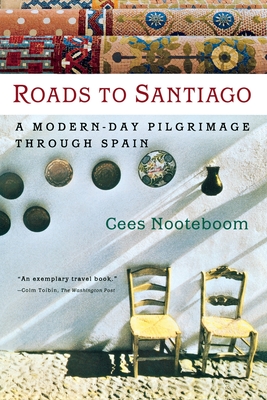
10) Roads to Santiago by Cees Nooteboom


Roads to Santiago Cover Image
like hello perfect afternoon
So this is a short tale of books like dominoes taking over huge swathes of my life. Roads to Santiago is a beautiful text in translation from the Dutch. The author is a poet who has lived with this troubling love for Spain for most of his adult life. The book is not a guide to the pilgrim paths or to any kind of depth of faith experience. I don't even know that you could follow any road Nooteboom takes and get to anywhere, in point of fact. In that, this is not unlike that other rambling Iberian route Journey to Portugal which I tried valiantly to mark out on a map of the country with zero success. (It was a valiant effort. There were colored pencils and copious notes.) I have memories of landscapes my eyes have never seen, and know the smell of churches whose names I cannot remember and have never spoken. Nooteboom considers history as he does the surface of a painting, or a plain, or the quality of air. 
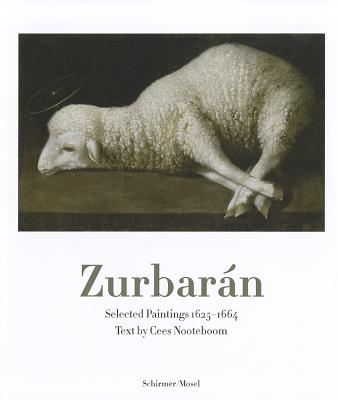
9780810917910: Zurbaran
St Francis of the many


His extended contemplations on the work of various artists, mostly Velazquez and Francisco de Zurbaran, are captivating. Particularly as I'd discovered that the St. Louis Art Museum owns one of Zurbaran's many St. Francis of Assisi paintings. There is extraordinary power in that contemplative image. Enough that one year I circled and circled around this catalog of an exhibition from the 1980s that I eventually bought. It's especially unnerving as this exhibition is one that Nooteboom mentions in his book - he went to both the New York and Paris shows. 

Sometimes the synchronicity, it is just odd.

Zurbaran: Selected Paintings 1625-1664 Cover Image
Saw the sheep, knew I wanted it
Another afternoon, another leisurely wander around the art museum's gift shop and I saw a book about Zurbaran that was priced out of my budget. So I copied out the ISBN and went hunting at work. It took about a week for the book to get to me. Best surprise? The text was written by one Cees Nooteboom, Dutch man of letters and part-time resident of Minorca.  

These three books were my companions during a lovely trip to snowbound Hermann, MO one Valentine's Day weekend. It was glorious and cold and solitary and the food was strange and the wine was not great. The books, though. The books were startling.

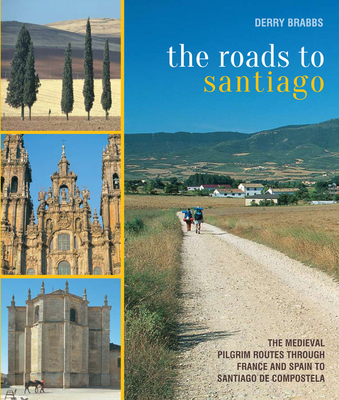
But don't worry, there's more. Because, you see, I know that there are guides to the pilgrim routes to Santiago, and it's been decided that this long walk is in my future. So back to the distribution center website with me, and will you be surprised? 

The Roads to Santiago: The Medieval Pilgrim Routes Through France and Spain to Santiago de Compostela Cover Image
So. Anyone wanna help take care of Ethel while I'm gone?
May your libraries offer such grandly quiet adventures as all those many miles of walking.

Monday, September 26, 2016

9) Fangirl by Rainbow Rowell

A book about a young woman beginning college, dealing with anxiety, a bipolar father and an absent twin sister that is also about fan fiction and writing and is set at my alma mater? Okay, the alma mater part doesn't really matter to anyone else but me (her geography is excellent and accurate). Fangirl is easily the most surprising book that I read in 2013.

Cath is a freshman in college. She moves in to her dorm only to discover that her roommate is not her twin sister Wren, but a loud, cool, confident and kind of pushy woman called Reagan. Her almost instantaneous shutdown begins a year filled with frustration, possibility and self-discovery. The book's title comes from Cath's fan fiction. She and her sister (and tons of others) are in love with a multi-volume Chosen One series called Simon Snow and Cath is writing her version of the end of the series - trying to get it done before the author publishes the actual last book.

The characters are utterly knowable and their story is kind of tremendous for how quotidian everything seems from the outside. The struggles to find a place for all of the things that a person is in a world that maybe doesn't have a lot of room for those things is one that many of us have known.

Rowell's sensitivity to the issues faced by people with anxiety is welcome and real. Her characters live with mental illness in a way that does not sensationalize or romanticize. They are complex people making decisions, not always all that well, but always honestly. Even the requisite tidy ending feels earned and satisfying, rather than expected and inevitable. Not requisite at all, in point of fact.

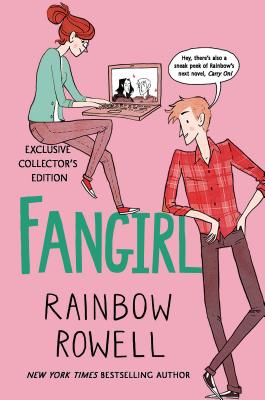
Fangirl Cover Image
Best book ever. Now with Fan Art!
It has been long enough since this book came out that I don't even remember who got the first galley, who read it first, who passed it on to who else - none of it. What I remember is that the Staff Pick shelf became a row of copies of Fangirl the week it was released. We were and remain, shamelessly devoted Rainbow Rowell fans. For reasons that can be summed in one phrase: ALL THE FEELS.

Cath is not a person I know from my mirror, but she is so like more than one of my best friends. I know her like I've never known another fictional character before. It helps that I also know Lincoln and Love Library and Nebraska pretty well, but mostly that's just reassuring. I trust Rowell to care about her locales, so I trust that she cares about her characters. And she does. Even the ones that I don't like - she does. I love that.

Fangirl did something else that I've never seen another book do - it inspired its author to write a work of fan fiction all of her own. It is about the characters from Simon Snow - remember? The series in Fangirl? The one Cath writes fan fiction of? That one? She wrote a whole book of it. Carry On is what it is called and it is magnificent - probably the only work of fan fiction that can ever be published. I know that there are people who see it as a novel featuring characters that were just in another novel but not fully realized, etc., but I think those people have never really considered fan fiction as a genre unto itself. Rowell clearly has. And she's got it down.

We had a little pop-up reading group for a few months reading through Rowell's bibliography. It's five books long, at the time it was four. I've never shared that kind of enthusiasm for an author and her works before or since. There were six of us (out of a staff of 17) who were in the book group. We got to go to tea with her once. It was intense and awkward and I kind of want to do it again. We can chat problems in pop culture.

Also the collector's edition (pictured above) has fan art for the endpapers - fan art of Cath (a fictional character) writing fan fiction about Simon and Baz (fictional characters from a fictional series of novels). Fan art of fictional fan fiction of fictional fiction. And then Rainbow Rowell wrote fan fiction of the fictional fiction. (also make outs. epic. perfect. exceptional. make outs.)

ALL.
THE.
FEELS.

Sunday, September 25, 2016

8) A Time of Gifts by Patrick Leigh Fermor

On December 8, 1933, Patrick Leigh Fermor set out on a journey that took him from The Hook of Holland to Istanbul. On foot. For eighteen months. He left England when he was eighteen. The first edition of A Time of Gifts, the first of the book chronicling this journey, was published in 1977, the second in 1986 and the third, built from his notes, posthumously in 2013.

There is no other work that I have read that compares to this. It holds an utterly unique place in the world of letters, even though young men walking away from England is not all that unusual, nor was it at the time. Partly it is Fermor's transformation from a relatively gauche teenager in a world that demanded diplomacy and tact, to a young man accustomed to change and shift with the days and nights in barns and castles and different languages every day. There are few joys that compare to his passage on the abbey at Melk (in photos rather like an overgrown muscial box), or his discourse on the way that language creates landscapes in his ears. 

There is nothing about this book that was uncrafted - Fermor did not sit down one fine day in 1975 and just take time jotting down notes and occasionally checking a map. The sentences are deliberate, the structure is chosen and the effect is hypnotizing. So much so that finishing the book I was a bit out of breath and not entirely ready for the next push down the way. (Between the Woods and the Water, btw, is frequently called the best of the three of these books. It is also without peer.)

A Time of Gifts Cover Image
Herein lie treasures untold.
You know how when you fall in love with an author you search for everything they've written only to find they've written introductions for boatloads of books they didn't write one of them writes the most extraordinary prose? I found Nan Shepherd and Laurie Lee and Edward Thomas through Robert MacFarlane that way. 

That is not what happened here. This book was on the shelving cart and jumped into my hand. I bought it almost immediately.


I love to walk. I have always walked. Usually with a destination in mind, but oh, to walk just to move through a place at the speed of a footstep - what bliss! Anyway, point is, the back of the book said 'walking,' it said something about Europe, and there's an introduction by Jan Morris. 

Books are dangerous tempting things. There are whole worlds in them, frequently hiding in plain sight in your own bland world that isn't bland at all, it's just not roiling with type and paper. I've no wish to go back in time. I've no nostalgia for a world that was still showing scars from a war almost 300 years gone - had I lived there, I think it would be different. There is a specific kind of cynicism in white liberal guilt that lingers even when the guilt is mostly shunted off to more useful pursuits. Like walking. Like meeting people and learning their languages and eating their food and working to repay them and laughing and drinking and dreaming and walking. 

It is a dream that got a foothold somewhere in the first pages of my first reading of this book. Walking. Days and weeks and months of walking. It is an old dream; A Time of Gifts gave it new life. Nostalgia is not what lies on a walking path no matter old it is. History is underfoot, not some illusion. Fermor interacts with that history all along the Danube, the river that is almost a companion on his journey. He meets Romani ('Gypsies') all along the way, especially as he moves south from Germany. I think of how soon they will be hunted in his time frame. How many of the people that he met will not live through the war. 

This is a travelogue that leaves me with sore feet and the need to wash the road I have not walked off a face that hasn't been outside for the better part of several hours. It gives me the world if only I will tie my shoelaces and go.

Saturday, September 24, 2016

7) The Art of Eating

The Art of Eating is a collection of five of the most well-known works by M.F.K. Fisher, Lady of All Things. Her writing about food is specific and uncomplicated - like the individual bits of a slice of mandarin orange, whole and slick and satisfying. In An Alphabet for Gourmets she offers entries like 'Dining Alone' for 'A' and 'G' is for 'Gluttony.' It is a surprising, whimsical and delicious book. Even serious and pressing topics like hunger during war and loneliness are treated with compassion, frankness, humor and humanity in How to Cook a Wolf (the wolf, of course, is hunger). Written during World War II, Fisher offers solutions to questions of how Americans can nourish themselves and, maybe, prevent their taste buds from dying off. As white America has never really had working taste buds, there is something inherently tragic and courageous in her attempts.

Food writing is a genre that is under-explored by most readers. There are some famous names like Anthony Bourdain and Ruth Reichl, so it's not a wholly ignored section. That said, not many people know of M.F.K. Fisher though they remember watching Julia Child on PBS - and yet these women were friends, they shared concerns about food and cooking and culture with each other and the world. Dig under the top layer of ingredients in any cook book or book about food and you will find life, steamy and simmering. The books in this collection are like a dam in a busy river - both because the book is a door stop, and because Fisher's prose requires a slowing of the mind, of the pulse, of the body. We are required to think with our gullets, to feel the effects of food beyond something like satisfaction. Eating something as simple as a slice of dried mandarin orange becomes an act of creating a story and becoming part of it. This is a worthy addition to any library.

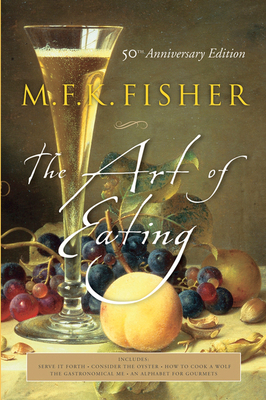
The Art of Eating: 50th Anniversary Edition Cover Image
This book is three inches thick.
The first book by M.F.K. Fisher that I ever read was about the time she spent in Provence before and after the Second World War, before and after her first marriage, before and after having children. Her descriptions of the places and people were respectful and lacking in that golden romantic glow of so many others who decamp to the South of France in attempts to find their souls. She did not seem even to notice a particularity to the light. She learned there to eat. She learned to be alone. She learned to be suspicious and eventually she teaches us how to consider change.

I'm angry that I was not introduced to her at a younger age. Angry that food writing is a thing shunted off to the bare spaces between fancy unused cookbooks or clumsily left somewhere in history section of your personal library. When I was a child at home, food mattered - we learned to taste it, to try new of it, to enjoy it and to seek out nourishment that fed our hearts and our souls and our bodies. That stayed with me. The outside world allows for "I won't like it and don't want to try"and while there is a completely normal component to that, it's not my go-to position on new food or new atmosphere. There is privilege in being comfortable and unhurried in any restaurant situation, and it is one of the few privileges for which I am grateful. I was raised to care about the food that people made; it is of them and they are sharing it with you. 

It was even more powerful to learn to care about the food that I make for myself. This book, along with If I Can Cook/You Know God Can and Super Natural Every Day opened up my kitchen and my personal food stories to me in ways that would never have happened without them. These are stories that I did not know how to tell. I had to hear them first, and then learn to recognize the experience.