Showing posts with label white privilege. Show all posts

Tuesday, October 11, 2016

Hair and the processing of privilege

#40days40books entry 23

Women's hair is big business and big fashion. There are not enough pages in the world to deconstruct the relationship between our dead scalp strands and ourselves. These two books are part of what happens when women take each other seriously and start to look at how hair molds and defines us and our journeys in the world.

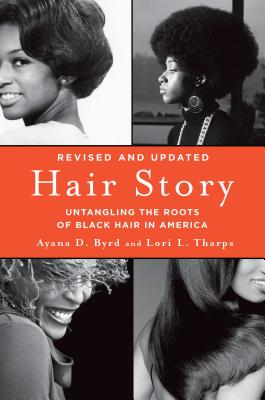
Me, My Hair, and I is an anthology of 27 essays by women from a variety of backgrounds. The essays range from personal to political, and from dye jobs to pubic hair. Hair Story is a more historical work that chronicles Black Hair in America from the time of slavery to the present. The 2nd edition was published in 2014.

Both books are thought-provoking, intimate and engaging.
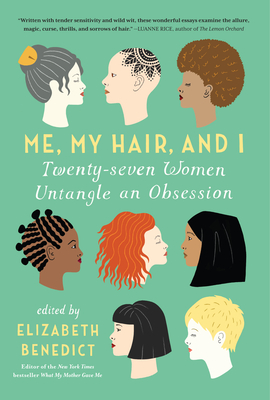
Me, My Hair, and I: Twenty-Seven Women Untangle an Obsession Cover ImageHair Story: Untangling the Roots of Black Hair in America Cover Image

I grabbed Me, My Hair, and I off of the galley shelves in a flurry of passion. I love to listen to women talking seriously about hair, and how wonderful to find a book whose cover promised an incredible range of voices and experiences.

And a white lady with dredlocs. You know.

At first, I had decided not to read that essay. And then, after being blown away by the politics and culture exposed and discussed so eloquently in some of the other essays, two things happened. I read a review of the book that pointed out the abundance of women of color on the cover as opposed to their words in the book. And then I heard Dr. Adrienne Keene's interview on Another Round, in which she talks about her hair for a moment.

Suddenly, clarity.

There are no veiled women in this book. Or Native women, or women discussing the struggles of Asian hair, and the Black women write about the politics and pain of hair only. And that one about the dredlocs? Listen. I read it and almost threw the book across the room.

I ordered Hair Story the next day. I found it because in my quest to find Black Women Travel Writers I found Lori Tharps (and Lauret Savoy.)(and that is all)(which is a conversation I will have later) who co-authored the book. The bibliography is like a candy store of information.

It is important that the things women do to ourselves to exist in the world are acknowledged as having meaning. The business of hair is huge, it has far-ranging cultural weight, it has environmental weight, and it isn't going away.

Benedict's book shares important stories, and you do have to deal with the blanket of white privilege to get at them. It's sticky and gets everywhere. Looking beyond privilege and discomfort with it is work. Seeking out stories in different voices means understanding the range of difference in voices. It means listening without response. It means being uncomfortable with ourselves. It means that we look harder when hair is used as a tool of abuse. It means we stop apologizing for the women who appropriate.

White women are not taught that we are complicit in the culture of oppression. So we have to learn to identify it. Naming for each other the places where we must do better is part of that learning.

Meanwhile, have this from the Guardian. It is glorious.

#40days40books list

Friday, September 30, 2016

Black Lamb and Grey Falcon by Rebecca West

#40days40books entry 13

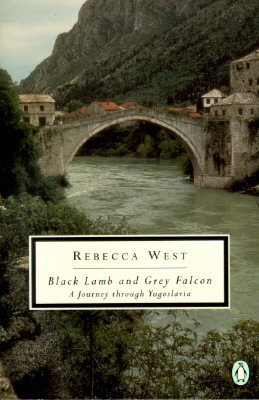
Black Lamb and Grey Falcon is a legitimate literary classic. Rebecca West's prose, her observation and storytelling are sharp, thoughtful and well-rounded. West wrote the book about six weeks of travel she and her husband undertook through Yugoslavia in 1937. Viking Press published it in 2 volumes in 1941.

The work follows their travel route and is easily enough followed on paper, though the subjects range far back in history. West's irritation at the amount of history about Yugoslavia that was unknown or ignored in the West is palpable and fuels much of this book. It is at times exhausting to be faced with so much information, so many places and peoples and at the same time, that exhaustion was exactly right. There is no absence of love for the people she meets and the land she travels. While her approach does romanticize the roles of history and culture, it is not careless and it is not without meat.

There are few travel narratives I have read that do not owe a debt to Rebecca West. The work of reading this is well worth it.

Black Lamb and Grey Falcon: A Journey Through Yugoslavia Cover Image
Yet another doorstop. Read this in chunks.
So, if I remember correctly (it's been a few years), this is a book that our Used Book Buyer brought to me one day and asked if I'd read it. There is nothing so delightful as a recommendation for a book from a friend, and particularly this friend who has an uncanny knack for gifting recommendations. 

It was utterly shocking to read. Rebecca West was then utterly unknown to me (as are most of the women who wrote for magazines since ever)(unless I've dug up their collections or travel books)(or someone mentions them in one of those books intended to redirect your attention away and toward and thank you for acknowledging this exceptional writing), and while I still know very little about her, this book is an anchor of my travel writing library.

She is not always a comfortable companion and she travels uncomfortable roads. Her extreme anger at nuns is distracting for me, though it does not affect the storytelling, only the audience. She is clearly writing from a specific perspective, one that is privileged, colonial and monied. 

The history and sense of need for understanding and compassion in the face of overlapping layers of ludicrous administration, wartime decisions, environmental degradation and the subsequent cultural developments is as relevant today as it was in the years leading up to the second World War. 

Paying attention to someone else's truth can lead to a need to wash your face right off when they are done speaking. That conflict is ever-present here. It comes with greater understanding. Whether that understanding is needed in your own library is entirely a matter of perspective. I keep it in mine as an active reminder to do better and learn more. Also her prose and her path are gorgeous.