Showing posts with label 2015 book. Show all posts

Monday, October 17, 2016

How to Suppress Women's Writing by Joanna Russ

#40days40books entry 29

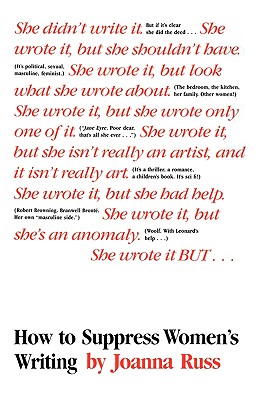
Another book from 1983. How to Suppress Women's Writing by Joanna Russ is a scathing tutorial in systemic sexism. The book is broken up into chapters that address many of the statements seen on the cover and their overall power to erase women from the narratives of publication and existence.

The writing is clear and undecorated, and the citations are rich and varied. The last chapter, particularly, is filled with projects and writers working to bring the work of women of color back into focus. The sting of satire here is pretty strong.
How to Suppress Women's Writing Cover Image
This book was recommended to me by a fellow bookseller who'd read it when it was originally published and was thrilled to see it on our shelves. It is a difficult difficult read. The thing is that it is also really funny and, like Angela Davis's book, grounded in a body of research that is made available to interested readers. Thank heavens for citations and bibliographies.

Probably this had a more profound effect on me because I am a writer, and so closely identify with the work that is here discussed. Representation matters. Sadly, every profession in which women have participated has a story that is similar, and everything that is listed in this book is that much more pronounced when the women writing are in any way marginalized.

Have you ever noticed that as soon as someone finds out that one woman was involved in a project whose public face was all men, there are suddenly two or three or twenty more? This book challenges me to look harder at who was writing when, and also I maybe decided to not read men during 2016 (except for reading groups, because duh) and that may have been one of the best reading decisions I made since I rediscovered children's picture books.

#40days40books list

Sunday, October 16, 2016

Angela Davis takes us to school

#40days40books entry 28

Angela Davis's 1983 book Women, Race & Class is a masterwork of cultural commentary. Davis tracks the Women's Movement from its earliest days chronicling the involvement and contributions of Black Women and the frequently dismissive and racist attitudes White Women held toward them, but not their work.

The book is fast-moving and filled with citations from a bibliography that would make any library jealous. Speeches, letters, prison records all contribute to give more texture to a story that many of us are only barely taught, if at all. Here are examples of women working to better the entire world and women working to improve only a very small, very white section of that world.

I cannot emphasize the importance of this book enough. It should be required reading for anyone in these here United States of America.

Women, Race, & Class Cover Image


White ladies who are feminists frequently fall into traps of white feminism (they get racist). This book is a lifetime's worth of history about how and why that happens. Not the racism part, that's the part about living in a society that denegrates all non-white people in order to extend specific privileges to white people and everything that entails. No. This is about the role of racism and classism in the Women's Movement.

Davis's writing is so sharp and fast - her examples and citations come thick and fast. She is a thorough researcher and excellent writer. It is not possible (or desirable) to hide your critical awareness in the craft of this work, and it is something she uses to good effect. While I will have to read it again to have a better grasp of the relationships of the people involved, the network of privilege and its corrosive effects on social justice movements is absolutely secure in my thinking.

It is a simple thing to be a White Woman claiming that being empowered as a women helps raise the bar for all women. It is also an egregious and deadly lie. Davis does not, in this book, ask for guilt or shame. She offers questions about complicity and ambition instead. Her work is pointed and purposeful. It is troubling and necessary.

This book is what I measure my decisions against - this is where I go when I have questions about how to feminist while white. Or, more accurately, how Not to feminist while white.

It's short. Shouldn't take long. Will change everything. Go for it.

#40days40books list

The Marys Wollstonecraft and Shelley

#40days40books entry 27

Romantic Outlaws by Charlotte Gordon is a dual biography of Mary Wollstonecraft and her daughter Mary Shelley. Wollstonecraft died ten days after Shelley was born, and this is the first biography to treat their relationship, distant as it was, as a viable force in the lives of both women.

Gordon contends that Wollstonecraft spent much of her writing life thinking about how to make the world better for girls and women. She developed curriculum to teach young women so that they could become full humans and not simply reproductive members of society. Mary Shelley lived in the pages of her mother's writing, never not aware of her importance or of the extraordinary expectations people placed on her intellect and behavior because both of her parents were radical philosophers of one kind or another.

The book's structure follows each woman through the same ages of their lives in alternating chapters, which steeps the reader in the ebb and flow of obstacle and understanding that was such an important part of both women's lives. It is an absolute treasure and enlightening reading.

Romantic Outlaws: The Extraordinary Lives of Mary Wollstonecraft & Mary Shelley Cover Image


This is a book that I picked up because of the title, to be honest, and just never put back down. I'd read Joanna Russ's brilliant skewering of patriarchal publishing How to Suppress Women's Writing and was ready to learn and ready to be furious at the silencing of so many women's voices over the last 200 years, much less the millennia that came before.

Both women railed against institutionalized sexism in philosophy and fiction. Both women were keenly aware of their relative (but Not total) uniqueness as women in letters. They thought about each other constantly - equally unknown, almost entirely unknowable. There were many times that I had to put the book down and take a deep breath to plunge back in to the terrible waters of blatant male privilege.

I loved it. Charlotte Gordon did an event at the bookstore when the hardcover was released and it was a pleasure to meet her and chat about the role of love in Wollstonecraft and Shelley's writing lives and frameworks.

Added to the bookshelf: Frankenstein by Mary Shelley, Letters Written in Sweden, Norway and Denmark and Maria by Mary Wollstonecraft. I already had A Vindication of the Rights of Women and still haven't finished it on account of constantly feeling the need to put the thing in the freezer.

#40days40books list

Friday, October 14, 2016

Love, InshAllah and the power of possibility

#40days40books entry 26

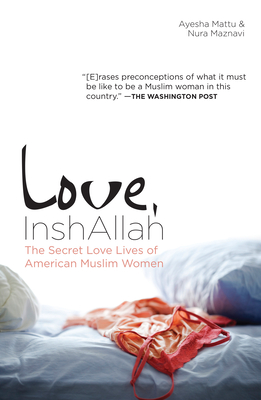
Love, InshAllah is a collection of stories by American Muslim Women talking about love and their love lives. The book and website are a wealth of wonderful writing about every aspect of loving relationships.

Here are stories of lost and found love, unexpected love, unrequited love, that one guy who was a terrible idea but oh well love - all of it. The women are from all over the country and world and their stories are in no way same from one to the next. They share labels and it is in the context of those labels that this collection finds its connections. It is well edited, well organized and engaging.
Love, InshAllah: The Secret Love Lives of American Muslim Women Cover Image

A bunch of us got together in the fall of 2014 to start a book club called Feminists in Love, in which we read about loving relationships and feminism and talk about how it all fits together in narratives, rhetoric and our own lives. It's been challenging, building, and transformative. This book was the first anthology that we read. It's been a bit since we all chatted about it, but a thing that I remember noting is that while many of us are well-read and progressive, none of us had read so many different Muslim voices before (Representation Matters!).

I'd learned about the website (which is wonderful and which should be required reading at least once a week) from the podcast Good Muslim Bad Muslim with Taz Ahmed and Zara Noorbakhsh (both are anthologized in this book). The podcast is produced monthly and is incredible and everyone should listen to it.

Love stories are important. Not the force fed ones with terrible gender politics and classism and racism, etc. and ad stupididem. The ones that we tell each other about our own lives - how many of us know the stories of how our parents met, how Stephen Colbert met his wife, that one time when you just stopped breathing because someone walked in the room. We fall in love. We love our friends. We love our families. We love our cities and our gardens and the furry/feathered ones who live in our houses. Love is daily. We tell its stories because it is our stories.

This collection reminded me.

#40days40books list

Thursday, October 13, 2016

Between the World and Me does not need my introduction

#40days40books entry 25

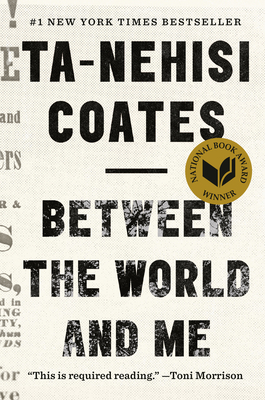
Between the World and Me from Ta-Nehisi Coates is a letter written to his son that is a monologue about what it means to be a Black man in America. Coates talks about his education, his professional and personal decisions and his responses to the world. He also relates stories of public expressions of racism that his son was present for, but may have missed or remembered differently because of his age.

It is not an easy book. Open it anywhere and there are hard words and uncomfortable truths from someone who is seemingly forever sharing hard words and uncomfortable truths.

Between the World and Me Cover Image

Honestly, if you are reading this blog, you already know about this book. I have nothing of meaning to add, so will offer instead a couple of links.

Ta-Nehisi Coates on Another Round
The Year of Black Memoir by Imani Perry for Public Books
A Matter of Words by Jarek Steele (in response to BLM signs and white privilege)

Also, if you get the chance to listen to the audio book, I recommend it. Reading the words after will be even more of a gut punch, but it is incredible to hear Coates speak his words to 'you' who is, in my case, definitely not 'me.'

#40days40books list

Wednesday, October 12, 2016

Finding what troubles me in Trace

#40days40books entry 24

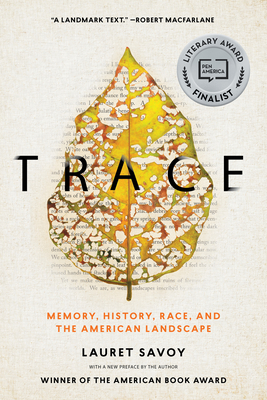
Lauret Savoy is a geologist of mixed heritage. Her book Trace: Memory, History, Race, and the American Landscape is a study in finding the stories that wind, water, time, and discomfort have eroded. She begins with a memory of traveling as a child to the Grand Canyon. The beauty of the landscape and the sting of casual racism in the memory of a woman who once was seven years old set the tone for the whole book.

Her specificity and understanding of how to tell the story of the land evoke clear images of places I've never seen. She travels along the border with Mexico and interacts with a man on patrol there. She and a friend tour a plantation in South Carolina and have questions about the absence of enslaved people in the narratives shared about the house. In the desert she goes looking for an army base and finds remnants. Ragged threads and bits of stories put together to work out the layers of her life before, the layers of the people who made her, who came before her, who lived, and left traces of themselves in the land. It takes sharp eyes and ears to pick them out, and she has both.

Trace: Memory, History, Race, and the American Landscape Cover Image

I grabbed this off the new release shelf the day that it came out. The cover is intense and intriguing, the subtitle is inviting and the author's background in geology was like a door opening up to some unimagined library. I love how scientists write about the world. Their specificity and ability to see the story of a place, of a tree or insect or weather pattern is captivating. And I wasn't disappointed. There is no place in this book for me to put my own memories over any of her landscapes - they are so sharp and clear and rooted that all the imaginative work reading this is in keeping up with her.

And it's hard work. There is loss and erasure. There are vast scopes of time, human and geologic, to cope with. There is the personal damage of racism, the psychic amputation of foiled creativity, the injustice of the forgotten. No landscape can lie about its origins in her gaze. I get poetic talking about the book, and that is how it should be.

This was also the first book I reviewed for WomenArts Quarterly.

People of color travel. People of color write. They photograph, draw, science, music, food, paint, sculpt, plant, shape, sew, etc. So where are the travel books? The answer is too obvious to warrant the question, and yet - we ask.

There are growing movements of people working to encourage change in the travel industry and in the world. Here are a few:

Nomadness Travel Tribe
TravelNoire
Vagrant Anonymous - in particular Decolonizing Travel
Bani Amor - also on twitter

#40days40books list

Tuesday, October 11, 2016

Hair and the processing of privilege

#40days40books entry 23

Women's hair is big business and big fashion. There are not enough pages in the world to deconstruct the relationship between our dead scalp strands and ourselves. These two books are part of what happens when women take each other seriously and start to look at how hair molds and defines us and our journeys in the world.

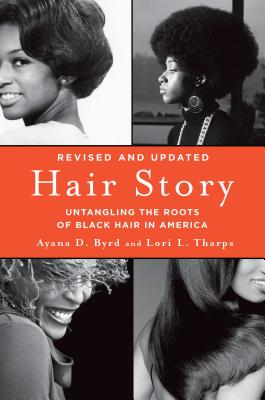
Me, My Hair, and I is an anthology of 27 essays by women from a variety of backgrounds. The essays range from personal to political, and from dye jobs to pubic hair. Hair Story is a more historical work that chronicles Black Hair in America from the time of slavery to the present. The 2nd edition was published in 2014.

Both books are thought-provoking, intimate and engaging.
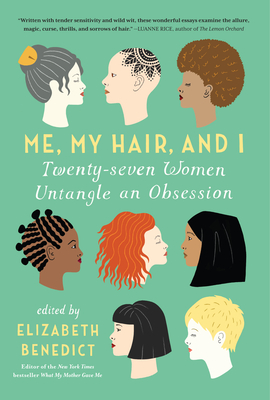
Me, My Hair, and I: Twenty-Seven Women Untangle an Obsession Cover ImageHair Story: Untangling the Roots of Black Hair in America Cover Image

I grabbed Me, My Hair, and I off of the galley shelves in a flurry of passion. I love to listen to women talking seriously about hair, and how wonderful to find a book whose cover promised an incredible range of voices and experiences.

And a white lady with dredlocs. You know.

At first, I had decided not to read that essay. And then, after being blown away by the politics and culture exposed and discussed so eloquently in some of the other essays, two things happened. I read a review of the book that pointed out the abundance of women of color on the cover as opposed to their words in the book. And then I heard Dr. Adrienne Keene's interview on Another Round, in which she talks about her hair for a moment.

Suddenly, clarity.

There are no veiled women in this book. Or Native women, or women discussing the struggles of Asian hair, and the Black women write about the politics and pain of hair only. And that one about the dredlocs? Listen. I read it and almost threw the book across the room.

I ordered Hair Story the next day. I found it because in my quest to find Black Women Travel Writers I found Lori Tharps (and Lauret Savoy.)(and that is all)(which is a conversation I will have later) who co-authored the book. The bibliography is like a candy store of information.

It is important that the things women do to ourselves to exist in the world are acknowledged as having meaning. The business of hair is huge, it has far-ranging cultural weight, it has environmental weight, and it isn't going away.

Benedict's book shares important stories, and you do have to deal with the blanket of white privilege to get at them. It's sticky and gets everywhere. Looking beyond privilege and discomfort with it is work. Seeking out stories in different voices means understanding the range of difference in voices. It means listening without response. It means being uncomfortable with ourselves. It means that we look harder when hair is used as a tool of abuse. It means we stop apologizing for the women who appropriate.

White women are not taught that we are complicit in the culture of oppression. So we have to learn to identify it. Naming for each other the places where we must do better is part of that learning.

Meanwhile, have this from the Guardian. It is glorious.

#40days40books list