https://www.wired.com/2016/08/mike-colter-luke-cage/
http://www.salon.com/2016/10/05/luke-cage-and-the-racial-empathy-gap-why-do-they-talk-about-being-black-all-the-time/
http://www.refinery29.com/2016/10/125108/luke-cage-black-characters-saying-n-word
http://fusion.net/story/353229/luke-cage-review/
http://www.independent.co.uk/arts-entertainment/tv/news/mike-colter-interview-luke-cage-marvel-netflix-the-defenders-black-lives-matter-terence-crutcher-a7344931.html
http://fusion.net/story/348066/luke-cage-hoodie-trayvon-martin/
https://www.fastcocreate.com/3064174/a-love-letter-to-black-women-cheo-hodari-coker-the-gender-dynamics-of-luke-cage
http://www.newyorker.com/culture/culture-desk/creating-luke-cage-the-first-woke-black-superhero-show
Thursday, October 6, 2016

bell hooks and the challenges of loving
#40days40books entry 17
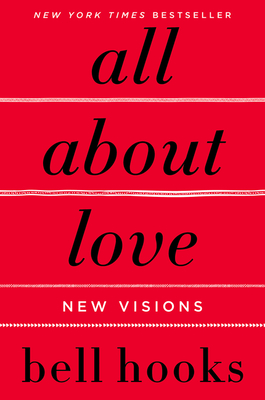
In All About Love, bell hooks takes her readers on a deeply felt journey into the heart of what it means to be a human who feels love. She digs through book after book about relationships and love to find definitions, perceptions, examples and possibilities for love in and out of relationships. It is not an easy journey to take, and it is not certain what will await us at the end. Her language is conversational and intimate, providing a kind of linguistic safe space for when the words come perilously close.
What is it to love as a verb rather than as a noun? What is it to look at the relationships in our lives and stop saying love where there is none? How does love love? Where is it, how is it, what does it bring to our lives at home and in the world? This book is a call to live in love actively and deliberately. hooks offers a challenge that is not about winning, rather about shifting perspectives and with them our lives.
I was introduced to this book by a co-worker over Valentine's Day one year as part of our Staff Pick display.
Loving relationships, particularly long-lasting ones, are complicated and living. Some of them need lots of thick and dense time and emotion to maintain, and some are less high-energy, though no less important or honest. Friendship is, to me, the bedrock of all loving relationships outside of family (although there is a ton of overlap), so deep contemplation of what that means is welcome.
It turns out that I'm deeply romantic, which does not translate easily as a consciously single person with extremely intense friendships. It's not impossible or improbable or anything, but it's not normalized, so it's not normal. Spending time pondering questions like "What does it mean to do my dishes in a loving way?" is not regular for many people, and yet the question is asked and it remains because every now and then I need reminding of it.
bell hooks is a writer whose work I came to unpardonably late. She asks questions that are frequently found floating at the edges of patriarchal discourse but that whiteness finds uncomfortable, so doesn't ask. We all have that gateway author whose work opens up the library, the internet, the world to further research and possibility, and hooks is that writer for me. Specifically this book, which brought back work I'd begun years ago during a time of high stakes healing - which is usually when we start thinking about Love in our lives, no?
Thinking back on it reminds me of that shift - the one from noun to verb. It's a simple key change with drastic and marrow deep consequences.
Like the breaths on either side of falling in love.
#40days40book list
In All About Love, bell hooks takes her readers on a deeply felt journey into the heart of what it means to be a human who feels love. She digs through book after book about relationships and love to find definitions, perceptions, examples and possibilities for love in and out of relationships. It is not an easy journey to take, and it is not certain what will await us at the end. Her language is conversational and intimate, providing a kind of linguistic safe space for when the words come perilously close.
What is it to love as a verb rather than as a noun? What is it to look at the relationships in our lives and stop saying love where there is none? How does love love? Where is it, how is it, what does it bring to our lives at home and in the world? This book is a call to live in love actively and deliberately. hooks offers a challenge that is not about winning, rather about shifting perspectives and with them our lives.
 |
| Valentine's Day gets an upgrade. |
I was introduced to this book by a co-worker over Valentine's Day one year as part of our Staff Pick display.
Loving relationships, particularly long-lasting ones, are complicated and living. Some of them need lots of thick and dense time and emotion to maintain, and some are less high-energy, though no less important or honest. Friendship is, to me, the bedrock of all loving relationships outside of family (although there is a ton of overlap), so deep contemplation of what that means is welcome.
It turns out that I'm deeply romantic, which does not translate easily as a consciously single person with extremely intense friendships. It's not impossible or improbable or anything, but it's not normalized, so it's not normal. Spending time pondering questions like "What does it mean to do my dishes in a loving way?" is not regular for many people, and yet the question is asked and it remains because every now and then I need reminding of it.
bell hooks is a writer whose work I came to unpardonably late. She asks questions that are frequently found floating at the edges of patriarchal discourse but that whiteness finds uncomfortable, so doesn't ask. We all have that gateway author whose work opens up the library, the internet, the world to further research and possibility, and hooks is that writer for me. Specifically this book, which brought back work I'd begun years ago during a time of high stakes healing - which is usually when we start thinking about Love in our lives, no?
Thinking back on it reminds me of that shift - the one from noun to verb. It's a simple key change with drastic and marrow deep consequences.
Like the breaths on either side of falling in love.
#40days40book list
Wednesday, October 5, 2016
Important stuff for October 5, 2016
Olives and the voices in my head
#40days40books entry 16
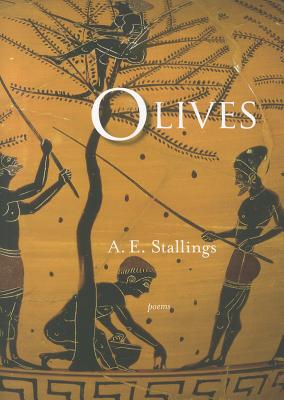
A.E. Stallings is a poet from Georgia who lives in Greece and writes the most gorgeous poetry in relatively strict form. In Olives, she treats the structure of fairy tales, myth and that odd comfort of nostalgia and loss with clarity and compassion. Her humor is made of knots and bone-deep discomforts, and she has impeccable timing. Here there are rocking lines and sharp phrases filling the trees with fruit and life.
The craft of this collection is astounding and easy to miss because she isn't drawing attention to it needlessly. Where it matters, she does. Fairy tales tend to be the province of women to draw out, turn upside down and make less sugary. Stallings does not shy away from that history, nor does she capitulate to it, a neat bit of work in measured lines and high stakes metaphor.
Read with water and bread on a day that has less room to breathe than at first you thought.
This was a reading group pick in 2014. I stared at the cover a bit, chatted with my poet friend who is in the group and bought it. Anyone who went through the Greek Myths phase recognizes the pull and lure of vase paintings. My own The Odyssey phase (unending) adds to that gravity. It was a welcome addition to the holiday season: a retail worker's roller coaster of high and low energy, sore feet, giddy laughter and constant presence.
The book was in my holiday reading pile this past New Year's, and while it was as good and deep and troubling and familiar as ever, something else happened last year that changed this for good. I got the Hamilton: An American Musical original cast recording and listened to it like it didn't break me into tiny pieces.
These two things should not be related.
Outside of having been written by MacArthur Foundation Geniuses who excel in form and the unexpected, I mean.
It was an absolute shock to read the first poem in the collection and hear Lin-Manuel Miranda's voice unbidden, reading it to me. It is important that you know that this was not the plan. I didn't connect the two before. I cannot unconnect them now. If ever the original cast of Hamilton is asked to read these (or any other) poems for recording for a reason that they are good with, it will introduce worlds to worlds already knitted only unseen.
In my head, Anthony Ramos and Phillipa Soo read this:
copied from the Poetry Foundation website
A.E. Stallings is a poet from Georgia who lives in Greece and writes the most gorgeous poetry in relatively strict form. In Olives, she treats the structure of fairy tales, myth and that odd comfort of nostalgia and loss with clarity and compassion. Her humor is made of knots and bone-deep discomforts, and she has impeccable timing. Here there are rocking lines and sharp phrases filling the trees with fruit and life.
The craft of this collection is astounding and easy to miss because she isn't drawing attention to it needlessly. Where it matters, she does. Fairy tales tend to be the province of women to draw out, turn upside down and make less sugary. Stallings does not shy away from that history, nor does she capitulate to it, a neat bit of work in measured lines and high stakes metaphor.
Read with water and bread on a day that has less room to breathe than at first you thought.
 |
| There's a poem on the back, too |
This was a reading group pick in 2014. I stared at the cover a bit, chatted with my poet friend who is in the group and bought it. Anyone who went through the Greek Myths phase recognizes the pull and lure of vase paintings. My own The Odyssey phase (unending) adds to that gravity. It was a welcome addition to the holiday season: a retail worker's roller coaster of high and low energy, sore feet, giddy laughter and constant presence.
The book was in my holiday reading pile this past New Year's, and while it was as good and deep and troubling and familiar as ever, something else happened last year that changed this for good. I got the Hamilton: An American Musical original cast recording and listened to it like it didn't break me into tiny pieces.
These two things should not be related.
Outside of having been written by MacArthur Foundation Geniuses who excel in form and the unexpected, I mean.
It was an absolute shock to read the first poem in the collection and hear Lin-Manuel Miranda's voice unbidden, reading it to me. It is important that you know that this was not the plan. I didn't connect the two before. I cannot unconnect them now. If ever the original cast of Hamilton is asked to read these (or any other) poems for recording for a reason that they are good with, it will introduce worlds to worlds already knitted only unseen.
In my head, Anthony Ramos and Phillipa Soo read this:
Fairy-tale Logic
Related Poem Content Details
Fairy tales are full of impossible tasks:
Gather the chin hairs of a man-eating goat,
Or cross a sulphuric lake in a leaky boat,
Select the prince from a row of identical masks,
Tiptoe up to a dragon where it basks
And snatch its bone; count dust specks, mote by mote,
Or learn the phone directory by rote.
Always it’s impossible what someone asks—
You have to fight magic with magic. You have to believe
That you have something impossible up your sleeve,
The language of snakes, perhaps, an invisible cloak,
An army of ants at your beck, or a lethal joke,
The will to do whatever must be done:
Marry a monster. Hand over your firstborn son.
Sorry, not sorry
Monday, October 3, 2016
Coriolanus and the power of casting
#40days40books entry 15
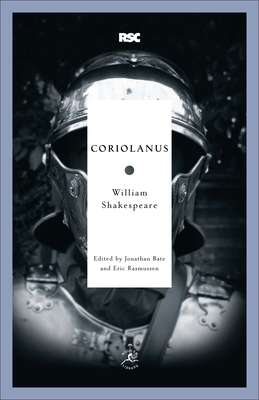
Coriolanus is one of Shakespeare's history plays. It follows the story of an ancient Roman called Caius Martius, who, legend told someone, took the city of Corioles single-handed after his soldiers ran away in cowardice. He was given a new name to commemorate his victory and invited to ascend to the position of consul. Instead of becoming consul, however, he was banished owing to a rather unpolitic personality. He ran off to join forces with his longtime nemesis and they set about pillaging the countryside on a direct course for Rome. Once he had got outside the walls of the city and was threatening to take it, his mother, wife and child appeared in supplication for their city and its inhabitants. Coriolanus relented, the attack was called off, and he was duly dispatched by hew new comrades as a traitor to the people he'd betrayed Rome by going to even though Rome had, in fact, just betrayed him by demanding that even though he was strong enough to die for the city he wasn't mild enough to rule it, but, really. Semantics, eh?
It's a later play and a very uneasy one. There are no real subplots. None of the supporting characters has a story of their own. The poetry is specific to each speaker and there are some gorgeous lines in this for anyone who takes the time to read it.
This isn't fun to watch. The history is ancient, but not so ancient as to be mythical. The story as Shakespeare creates it is uncomfortably resonant and personal. It is glorious.
 |
| Unexpected and brutal, this one. |
In performance, of course, it is seething, sweating, bleeding, unyielding and uncomfortable.
At one point in the action Coriolanus is expected to stand in a public place wearing a gown of modesty and baring the scars he has won in action to any of the plebians who ask. It is an act intended to foster goodwill. There is a specific area of my gut that is set aside for moments of physical vulnerability, and it was on fire the entire time.
We left gutted and babbling and deeply grateful to the folks at that theatre for casting the way they did - if Hiddleston hadn't been in it, we wouldn't have read the play.
And that would have been terrible.
#40days40books list
*before we discovered he is super basic
Sunday, October 2, 2016
One Fish Two Fish by Dr. Suess
#40days40books entry 14
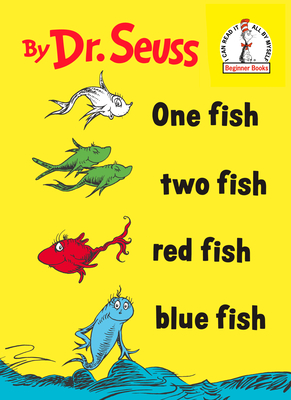
One Fish Two Fish Red Fish Blue Fish was published in 1960 and continues to delight and confound to this day. Nothing happens. There is no plot. Which is part of what makes this classic what it is - utter absurdity in motion. It is also an extraordinary boost to the imagination. Who even thinks of this stuff? Dr. Suess, that's who.
I read this book one Saturday downtown sometime in 2013, and it blew my mind. Not because of the content or the rhyming (or the tongue-twisters that didn't twist my tongue off). At one point I looked up and there were 7 children, all under the age of 4 sitting quietly. Quietly! Listening. That had never happened before. I'd never had that big of a crowd for Storytime that didn't have a guest author, and I'd never seen the children sit so still during an entire book. And it is not a short book. The power of Suess, I guess.
Back in May of 2016, we hosted a group of kids from a local school at the store for a morning of Storytime and activities. I read If I Rad the Zoo to them. I ... did not read the book beforehand and there's a line in it that caught me entirely off guard. You know those moments around the dinner table when you've just said The Wrong Thing and everyone gets really quiet? The line is "I'll hunt in the mountains of Zomba-ma-Tant/ with helpers who all wear their eyes in a slant" and ... well, I think you see. It's awkward. You flinch. That happened. We all got real, real quiet. And then I took a deep breath and kept going, with one eye on the sentence ahead for the rest of the book.
Some few days later a customer came upstairs with a used copy of Geisel's WWII political art, and noted the anti-Japanese racism in his work of the time.
Great.
All our faves are problematic. That's how humans work. Also, all our faves are recorded on the internet because that is how contemporary civilization works. The internet is searchable. I searched.
"dr suess japanese"
And discovered that Horton Hears a Who was written by Dr. Suess as recognition of, and attempts at atonement for, his anti-Japanese racism and sentiment during the war. See also: Can We Forgive Dr. Suess
I mean, look, there are always other authors to read. Ezra Jack Keats, as it turns out, is even more amazing than we all thought.
And I will find others. Because you don't stop doing that work. Clearly. Dr. Suess is still helping me open my mind and find more in the world.
#40days40books list
One Fish Two Fish Red Fish Blue Fish was published in 1960 and continues to delight and confound to this day. Nothing happens. There is no plot. Which is part of what makes this classic what it is - utter absurdity in motion. It is also an extraordinary boost to the imagination. Who even thinks of this stuff? Dr. Suess, that's who.
 |
| Upside down and backwards. Whew. |
I read this book one Saturday downtown sometime in 2013, and it blew my mind. Not because of the content or the rhyming (or the tongue-twisters that didn't twist my tongue off). At one point I looked up and there were 7 children, all under the age of 4 sitting quietly. Quietly! Listening. That had never happened before. I'd never had that big of a crowd for Storytime that didn't have a guest author, and I'd never seen the children sit so still during an entire book. And it is not a short book. The power of Suess, I guess.
Back in May of 2016, we hosted a group of kids from a local school at the store for a morning of Storytime and activities. I read If I Rad the Zoo to them. I ... did not read the book beforehand and there's a line in it that caught me entirely off guard. You know those moments around the dinner table when you've just said The Wrong Thing and everyone gets really quiet? The line is "I'll hunt in the mountains of Zomba-ma-Tant/ with helpers who all wear their eyes in a slant" and ... well, I think you see. It's awkward. You flinch. That happened. We all got real, real quiet. And then I took a deep breath and kept going, with one eye on the sentence ahead for the rest of the book.
Some few days later a customer came upstairs with a used copy of Geisel's WWII political art, and noted the anti-Japanese racism in his work of the time.
Great.
All our faves are problematic. That's how humans work. Also, all our faves are recorded on the internet because that is how contemporary civilization works. The internet is searchable. I searched.
"dr suess japanese"
And discovered that Horton Hears a Who was written by Dr. Suess as recognition of, and attempts at atonement for, his anti-Japanese racism and sentiment during the war. See also: Can We Forgive Dr. Suess
I mean, look, there are always other authors to read. Ezra Jack Keats, as it turns out, is even more amazing than we all thought.
And I will find others. Because you don't stop doing that work. Clearly. Dr. Suess is still helping me open my mind and find more in the world.
#40days40books list
Subscribe to:
Posts (Atom)