Wednesday, October 5, 2016
Important stuff for October 5, 2016
How Banning Books Marginalizes Children
Why Laurie Halse Anderson Writes For Children: "Literature Is The Best Gift We Can Share With Them"
Rest in Power: Gloria Naylor, Author of ‘The Women of Brewster Place,’ Has Died
James Patterson’s Holiday Bonus Program for Indie Booksellers Returns

Olives and the voices in my head
#40days40books entry 16
A.E. Stallings is a poet from Georgia who lives in Greece and writes the most gorgeous poetry in relatively strict form. In Olives, she treats the structure of fairy tales, myth and that odd comfort of nostalgia and loss with clarity and compassion. Her humor is made of knots and bone-deep discomforts, and she has impeccable timing. Here there are rocking lines and sharp phrases filling the trees with fruit and life.
The craft of this collection is astounding and easy to miss because she isn't drawing attention to it needlessly. Where it matters, she does. Fairy tales tend to be the province of women to draw out, turn upside down and make less sugary. Stallings does not shy away from that history, nor does she capitulate to it, a neat bit of work in measured lines and high stakes metaphor.
Read with water and bread on a day that has less room to breathe than at first you thought.
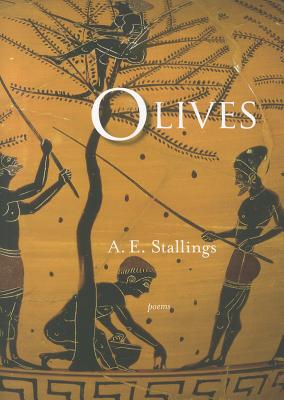
This was a reading group pick in 2014. I stared at the cover a bit, chatted with my poet friend who is in the group and bought it. Anyone who went through the Greek Myths phase recognizes the pull and lure of vase paintings. My own The Odyssey phase (unending) adds to that gravity. It was a welcome addition to the holiday season: a retail worker's roller coaster of high and low energy, sore feet, giddy laughter and constant presence.
The book was in my holiday reading pile this past New Year's, and while it was as good and deep and troubling and familiar as ever, something else happened last year that changed this for good. I got the Hamilton: An American Musical original cast recording and listened to it like it didn't break me into tiny pieces.
These two things should not be related.
Outside of having been written by MacArthur Foundation Geniuses who excel in form and the unexpected, I mean.
It was an absolute shock to read the first poem in the collection and hear Lin-Manuel Miranda's voice unbidden, reading it to me. It is important that you know that this was not the plan. I didn't connect the two before. I cannot unconnect them now. If ever the original cast of Hamilton is asked to read these (or any other) poems for recording for a reason that they are good with, it will introduce worlds to worlds already knitted only unseen.
In my head, Anthony Ramos and Phillipa Soo read this:
copied from the Poetry Foundation website
A.E. Stallings is a poet from Georgia who lives in Greece and writes the most gorgeous poetry in relatively strict form. In Olives, she treats the structure of fairy tales, myth and that odd comfort of nostalgia and loss with clarity and compassion. Her humor is made of knots and bone-deep discomforts, and she has impeccable timing. Here there are rocking lines and sharp phrases filling the trees with fruit and life.
The craft of this collection is astounding and easy to miss because she isn't drawing attention to it needlessly. Where it matters, she does. Fairy tales tend to be the province of women to draw out, turn upside down and make less sugary. Stallings does not shy away from that history, nor does she capitulate to it, a neat bit of work in measured lines and high stakes metaphor.
Read with water and bread on a day that has less room to breathe than at first you thought.
 |
| There's a poem on the back, too |
This was a reading group pick in 2014. I stared at the cover a bit, chatted with my poet friend who is in the group and bought it. Anyone who went through the Greek Myths phase recognizes the pull and lure of vase paintings. My own The Odyssey phase (unending) adds to that gravity. It was a welcome addition to the holiday season: a retail worker's roller coaster of high and low energy, sore feet, giddy laughter and constant presence.
The book was in my holiday reading pile this past New Year's, and while it was as good and deep and troubling and familiar as ever, something else happened last year that changed this for good. I got the Hamilton: An American Musical original cast recording and listened to it like it didn't break me into tiny pieces.
These two things should not be related.
Outside of having been written by MacArthur Foundation Geniuses who excel in form and the unexpected, I mean.
It was an absolute shock to read the first poem in the collection and hear Lin-Manuel Miranda's voice unbidden, reading it to me. It is important that you know that this was not the plan. I didn't connect the two before. I cannot unconnect them now. If ever the original cast of Hamilton is asked to read these (or any other) poems for recording for a reason that they are good with, it will introduce worlds to worlds already knitted only unseen.
In my head, Anthony Ramos and Phillipa Soo read this:
Fairy-tale Logic
Related Poem Content Details
Fairy tales are full of impossible tasks:
Gather the chin hairs of a man-eating goat,
Or cross a sulphuric lake in a leaky boat,
Select the prince from a row of identical masks,
Tiptoe up to a dragon where it basks
And snatch its bone; count dust specks, mote by mote,
Or learn the phone directory by rote.
Always it’s impossible what someone asks—
You have to fight magic with magic. You have to believe
That you have something impossible up your sleeve,
The language of snakes, perhaps, an invisible cloak,
An army of ants at your beck, or a lethal joke,
The will to do whatever must be done:
Marry a monster. Hand over your firstborn son.
Sorry, not sorry
Monday, October 3, 2016
Coriolanus and the power of casting
#40days40books entry 15
Coriolanus is one of Shakespeare's history plays. It follows the story of an ancient Roman called Caius Martius, who, legend told someone, took the city of Corioles single-handed after his soldiers ran away in cowardice. He was given a new name to commemorate his victory and invited to ascend to the position of consul. Instead of becoming consul, however, he was banished owing to a rather unpolitic personality. He ran off to join forces with his longtime nemesis and they set about pillaging the countryside on a direct course for Rome. Once he had got outside the walls of the city and was threatening to take it, his mother, wife and child appeared in supplication for their city and its inhabitants. Coriolanus relented, the attack was called off, and he was duly dispatched by hew new comrades as a traitor to the people he'd betrayed Rome by going to even though Rome had, in fact, just betrayed him by demanding that even though he was strong enough to die for the city he wasn't mild enough to rule it, but, really. Semantics, eh?
It's a later play and a very uneasy one. There are no real subplots. None of the supporting characters has a story of their own. The poetry is specific to each speaker and there are some gorgeous lines in this for anyone who takes the time to read it.
This isn't fun to watch. The history is ancient, but not so ancient as to be mythical. The story as Shakespeare creates it is uncomfortably resonant and personal. It is glorious.
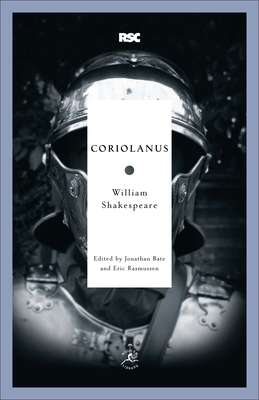 |
| Unexpected and brutal, this one. |
In performance, of course, it is seething, sweating, bleeding, unyielding and uncomfortable.
At one point in the action Coriolanus is expected to stand in a public place wearing a gown of modesty and baring the scars he has won in action to any of the plebians who ask. It is an act intended to foster goodwill. There is a specific area of my gut that is set aside for moments of physical vulnerability, and it was on fire the entire time.
We left gutted and babbling and deeply grateful to the folks at that theatre for casting the way they did - if Hiddleston hadn't been in it, we wouldn't have read the play.
And that would have been terrible.
#40days40books list
*before we discovered he is super basic
Sunday, October 2, 2016
One Fish Two Fish by Dr. Suess
#40days40books entry 14
One Fish Two Fish Red Fish Blue Fish was published in 1960 and continues to delight and confound to this day. Nothing happens. There is no plot. Which is part of what makes this classic what it is - utter absurdity in motion. It is also an extraordinary boost to the imagination. Who even thinks of this stuff? Dr. Suess, that's who.
I read this book one Saturday downtown sometime in 2013, and it blew my mind. Not because of the content or the rhyming (or the tongue-twisters that didn't twist my tongue off). At one point I looked up and there were 7 children, all under the age of 4 sitting quietly. Quietly! Listening. That had never happened before. I'd never had that big of a crowd for Storytime that didn't have a guest author, and I'd never seen the children sit so still during an entire book. And it is not a short book. The power of Suess, I guess.
Back in May of 2016, we hosted a group of kids from a local school at the store for a morning of Storytime and activities. I read If I Rad the Zoo to them. I ... did not read the book beforehand and there's a line in it that caught me entirely off guard. You know those moments around the dinner table when you've just said The Wrong Thing and everyone gets really quiet? The line is "I'll hunt in the mountains of Zomba-ma-Tant/ with helpers who all wear their eyes in a slant" and ... well, I think you see. It's awkward. You flinch. That happened. We all got real, real quiet. And then I took a deep breath and kept going, with one eye on the sentence ahead for the rest of the book.
Some few days later a customer came upstairs with a used copy of Geisel's WWII political art, and noted the anti-Japanese racism in his work of the time.
Great.
All our faves are problematic. That's how humans work. Also, all our faves are recorded on the internet because that is how contemporary civilization works. The internet is searchable. I searched.
"dr suess japanese"
And discovered that Horton Hears a Who was written by Dr. Suess as recognition of, and attempts at atonement for, his anti-Japanese racism and sentiment during the war. See also: Can We Forgive Dr. Suess
I mean, look, there are always other authors to read. Ezra Jack Keats, as it turns out, is even more amazing than we all thought.
And I will find others. Because you don't stop doing that work. Clearly. Dr. Suess is still helping me open my mind and find more in the world.
#40days40books list
One Fish Two Fish Red Fish Blue Fish was published in 1960 and continues to delight and confound to this day. Nothing happens. There is no plot. Which is part of what makes this classic what it is - utter absurdity in motion. It is also an extraordinary boost to the imagination. Who even thinks of this stuff? Dr. Suess, that's who.
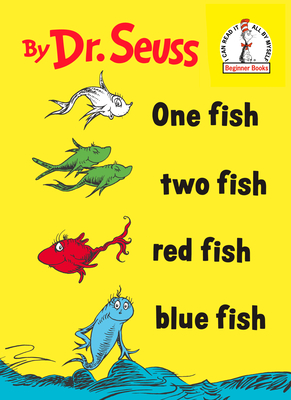 |
| Upside down and backwards. Whew. |
I read this book one Saturday downtown sometime in 2013, and it blew my mind. Not because of the content or the rhyming (or the tongue-twisters that didn't twist my tongue off). At one point I looked up and there were 7 children, all under the age of 4 sitting quietly. Quietly! Listening. That had never happened before. I'd never had that big of a crowd for Storytime that didn't have a guest author, and I'd never seen the children sit so still during an entire book. And it is not a short book. The power of Suess, I guess.
Back in May of 2016, we hosted a group of kids from a local school at the store for a morning of Storytime and activities. I read If I Rad the Zoo to them. I ... did not read the book beforehand and there's a line in it that caught me entirely off guard. You know those moments around the dinner table when you've just said The Wrong Thing and everyone gets really quiet? The line is "I'll hunt in the mountains of Zomba-ma-Tant/ with helpers who all wear their eyes in a slant" and ... well, I think you see. It's awkward. You flinch. That happened. We all got real, real quiet. And then I took a deep breath and kept going, with one eye on the sentence ahead for the rest of the book.
Some few days later a customer came upstairs with a used copy of Geisel's WWII political art, and noted the anti-Japanese racism in his work of the time.
Great.
All our faves are problematic. That's how humans work. Also, all our faves are recorded on the internet because that is how contemporary civilization works. The internet is searchable. I searched.
"dr suess japanese"
And discovered that Horton Hears a Who was written by Dr. Suess as recognition of, and attempts at atonement for, his anti-Japanese racism and sentiment during the war. See also: Can We Forgive Dr. Suess
I mean, look, there are always other authors to read. Ezra Jack Keats, as it turns out, is even more amazing than we all thought.
And I will find others. Because you don't stop doing that work. Clearly. Dr. Suess is still helping me open my mind and find more in the world.
#40days40books list
Friday, September 30, 2016
Black Lamb and Grey Falcon by Rebecca West
#40days40books entry 13
Black Lamb and Grey Falcon is a legitimate literary classic. Rebecca West's prose, her observation and storytelling are sharp, thoughtful and well-rounded. West wrote the book about six weeks of travel she and her husband undertook through Yugoslavia in 1937. Viking Press published it in 2 volumes in 1941.
The work follows their travel route and is easily enough followed on paper, though the subjects range far back in history. West's irritation at the amount of history about Yugoslavia that was unknown or ignored in the West is palpable and fuels much of this book. It is at times exhausting to be faced with so much information, so many places and peoples and at the same time, that exhaustion was exactly right. There is no absence of love for the people she meets and the land she travels. While her approach does romanticize the roles of history and culture, it is not careless and it is not without meat.
There are few travel narratives I have read that do not owe a debt to Rebecca West. The work of reading this is well worth it.
So, if I remember correctly (it's been a few years), this is a book that our Used Book Buyer brought to me one day and asked if I'd read it. There is nothing so delightful as a recommendation for a book from a friend, and particularly this friend who has an uncanny knack for gifting recommendations.
Black Lamb and Grey Falcon is a legitimate literary classic. Rebecca West's prose, her observation and storytelling are sharp, thoughtful and well-rounded. West wrote the book about six weeks of travel she and her husband undertook through Yugoslavia in 1937. Viking Press published it in 2 volumes in 1941.
The work follows their travel route and is easily enough followed on paper, though the subjects range far back in history. West's irritation at the amount of history about Yugoslavia that was unknown or ignored in the West is palpable and fuels much of this book. It is at times exhausting to be faced with so much information, so many places and peoples and at the same time, that exhaustion was exactly right. There is no absence of love for the people she meets and the land she travels. While her approach does romanticize the roles of history and culture, it is not careless and it is not without meat.
There are few travel narratives I have read that do not owe a debt to Rebecca West. The work of reading this is well worth it.
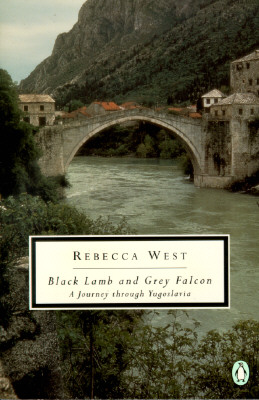 |
| Yet another doorstop. Read this in chunks. |
It was utterly shocking to read. Rebecca West was then utterly unknown to me (as are most of the women who wrote for magazines since ever)(unless I've dug up their collections or travel books)(or someone mentions them in one of those books intended to redirect your attention away and toward and thank you for acknowledging this exceptional writing), and while I still know very little about her, this book is an anchor of my travel writing library.
She is not always a comfortable companion and she travels uncomfortable roads. Her extreme anger at nuns is distracting for me, though it does not affect the storytelling, only the audience. She is clearly writing from a specific perspective, one that is privileged, colonial and monied.
The history and sense of need for understanding and compassion in the face of overlapping layers of ludicrous administration, wartime decisions, environmental degradation and the subsequent cultural developments is as relevant today as it was in the years leading up to the second World War.
Paying attention to someone else's truth can lead to a need to wash your face right off when they are done speaking. That conflict is ever-present here. It comes with greater understanding. Whether that understanding is needed in your own library is entirely a matter of perspective. I keep it in mine as an active reminder to do better and learn more. Also her prose and her path are gorgeous.
Timmy Failure by Stephan Pastis
#40days40books entry 12
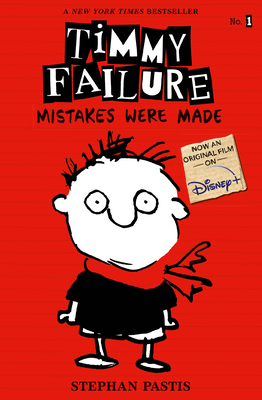
Stephan Pastis is best known as the creator of Pearls Before Swine, a daily comic that's been in papers since 2001. In 2013, Candlewick Press published his first middle grade novel featuring a character entirely separate from that world (although, truth be told, Timmy would not be entirely out of place there. Nor would Total.). Meet Timmy Failure in his first adventure: Mistakes Were Made.
Timmy is a high-energy, low-intellect kid with a polar bear for a best friend and a nemesis (She Who Will Not Be Named (Corrina Corrina)) for the record books. He is adjusting to living with his mother in a new apartment. She works a lot and he has decided to help make money by starting a detective agency with his pet polar bear, Total. The agency is called Total Failure, Inc. Total eats most of the profits. Most of the costs, too.
There are now five books in the series, and Timmy shows no sign of suddenly getting it right. Thankfully.
One of my co-workers handed me the galley for this book in late summer of 2012, not long before we hosted Stephan Pastis on book tour for a Pearls Before Swine collection. (pro-tip: If you get the chance, go see him when he goes on book tour. The man can tell a story. Get there early. Plan to stand in line if you want the book signed. It will take a while. It will be worth it.). I managed to not drool my love for this book all over him. Not by much. We were slightly understaffed. That helped.
 |
| This kid. Seriously. |
Timmy is kind of an idiot. He is young, his world has just flipped itself, his polar bear is a garbage disposal who messes up everything, and he has to deal with all sorts of people around him who make no sense to the poor boy. He decides to add order to things by solving mysteries. He is not always amazing at solving mysteries. Or at accepting the consequences when his "solutions" are not exactly on the mark.
Normally, I would run as fast as possible away from this character, but Pastis gives him depth, sweetness and a naivete that resonate throughout his shenanigans. This was the first middle grade book that I'd connected with for 6 years, and with it came a whole library of books. The best books for middle grade readers are the ones that get that kids see the horrible in the world and know they will have to deal with it someday. Not today. Not yet. Soon enough. They know they have to be ready for it, and that lends a weight to the journeys of these characters that when done well makes these narratives almost fly off the page.
Timmy is living with his mom who has to work too hard and gets too little support from anyone else. He doesn't know what's happened, really, and he doesn't know how to help her. But help is needed and questions have to be answered, so start a detective agency. I have no idea what Pastis thought he was doing when he wrote these books, but I find in them laughter in the face of the weight of one kid's world that otherwise might be too much.
Subscribe to:
Posts (Atom)